
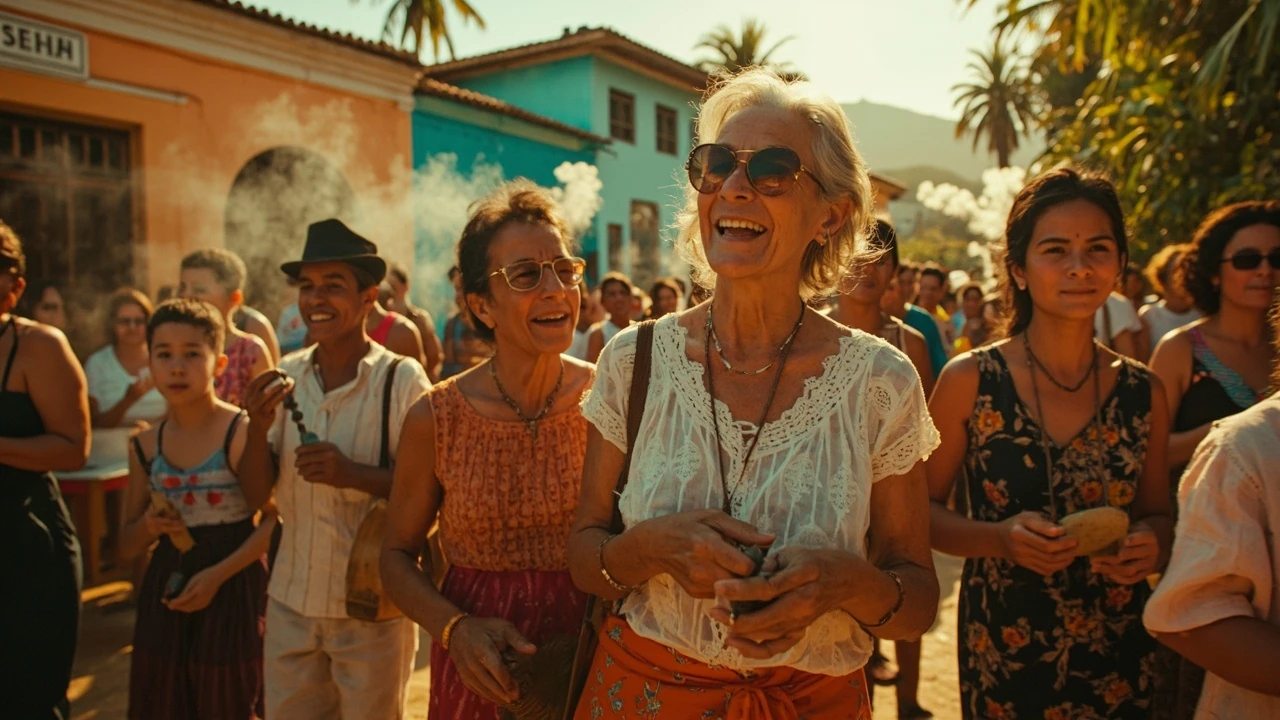
Brazil people: a practical guide to the country’s cultural diversity
A first-time visitor can meet a business owner in São Paulo, share a meal with a family in Salvador, and then travel north to a riverside community where daily life follows a completely different rhythm without leaving Brazil. That contrast is the first thing to understand about Brazil people: there is no single personality that represents the entire country.
Brazil is home to more than 214 million people in a federation of 26 states and a federal district. Its population includes Indigenous communities, descendants of enslaved Africans brought to the country, Portuguese and other European immigrants, and more recent arrivals from across Latin America and elsewhere. The country is also officially Portuguese-speaking, which makes language the easiest place to begin. Yet the way people speak, the stories they share, and the traditions they preserve vary considerably by region.
For travelers, the useful question is not simply “What are Brazil people like?” That wording risks turning a vast, diverse population into a stereotype. A better approach is to ask what shapes a person’s identity, how communities express differences, and what behavior shows respect in a specific place. That approach can make a visit warmer, reduce misunderstandings, and reveal much more than a checklist of national customs.
| What to notice | Why it matters for visitors | A respectful way to engage |
|---|---|---|
| Language and accent | Most conversations take place in Portuguese, but vocabulary and pronunciation can change from one region to another. | Ask whether someone prefers English or Portuguese when a language barrier becomes apparent. |
| Regional heritage | Food, music, celebrations, and family traditions often reflect local histories as well as the national story. | Ask about a tradition’s meaning instead of assuming every custom is the same throughout Brazil. |
| Family and social life | Meals, celebrations, and visits often carry more importance than a quick tourist stop. | Accept an invitation graciously, even when you need to limit the time you can spend. |
| Changing society | Traditions coexist with modern cities, a diverse workforce, changing families, and strong debates about identity and inequality. | Listen for differences within communities rather than dividing people into simple categories. |
What shaped the people of Brazil?
Brazil’s population grew through centuries of Indigenous life, Portuguese colonization, the forced migration of Africans, immigration, and the country’s later economic development. These histories continue to shape how people understand family, work, religion, place, and belonging. They also explain why a short visit can produce surprising contrasts.
Long before European colonization, Indigenous peoples lived across the territory that became Brazil. Archaeological evidence shows human habitation in the region dating back many thousands of years, and early communities developed complex pottery, social structures, and large settlements in parts of the Amazon. These histories are not simply a backdrop to modern Brazil; they are part of the country’s living cultural inheritance.
Portuguese arrival in 1500 began a period of colonization, land seizure, violent conflict, and forced labor. Sugar plantations became closely connected to the importation of enslaved people from Africa, and more than 2.8 million Africans arrived between 1500 and 1800 according to the historical overview in a concise overview of Brazil, which provides useful background for this point. Their forced displacement affected communities and economies far beyond the plantation ports. African cultural forms also became enduring parts of Brazilian music, dance, food, religious practice, and language.
Immigration added further layers. Portuguese, German, Italian, Japanese, Lebanese, Syrian, Spanish, and other communities established themselves in different parts of the country. São Paulo, for example, became associated with a large and diverse urban population, while the southern states developed strong connections to European immigration. Later arrivals from neighboring countries and other parts of Latin America have continued to reshape cities and communities.
These layers should not be treated as a neat sequence. Indigenous nations, African-descendant communities, immigrant neighborhoods, and established urban populations have always interacted. Nor should the history of slavery be reduced to a distant episode. Its effects remain relevant to debates about racial inequality, cultural representation, economic opportunity, and national identity.
- Indigenous heritage: Continues through nations, languages, land rights, environmental knowledge, art, and community-specific traditions.
- African heritage: Shapes many musical genres, religious traditions, foods, dance forms, and community histories across Brazil.
- European immigration: Contributed to regional industries, cuisines, architecture, religious life, and urban neighborhoods.
- Internal migration: Moved workers and families between rural areas, regional capitals, and large coastal cities.
- More recent migration: Has made metropolitan areas culturally more varied while also raising questions about belonging and opportunity.
Understanding this history is not the same as assigning a personality to every Brazilian. It is a way to recognize that pride, hospitality, regional loyalty, political disagreement, and economic inequality can exist in the same conversation.
How regional identities shape everyday life
Brazil has five broad geographic regions, and each creates a different setting for social interaction. The regions do not produce rigid “types” of people, but they influence what visitors are most likely to encounter. A business district in São Paulo, a fishing community in northern Pará, and a family gathering in Rio Grande do Sul operate within the same national system while reflecting distinct local economies and histories.
| Region | Useful cultural context | What a visitor may notice | Questions that open a useful conversation |
|---|---|---|---|
| Southeast | Includes São Paulo and Rio de Janeiro, the country’s best-known metropolitan centers, with extensive internal migration and diverse neighborhoods. | Fast-paced commercial life, strong food and music scenes, sharp differences between districts, and a mix of local and international influences. | “Which part of São Paulo do you consider home, and what does that area feel like?” |
| Northeast | Has a particularly visible Afro-Brazilian cultural heritage as well as strong Indigenous histories in some areas. | Music and dance traditions, communal celebrations, distinctive foods, colonial-era centers, and lively coastal cities. | “Which local celebration or music tradition does your family value most?” |
| South | Was shaped heavily by European immigration and has a landscape and climate unlike much of the tropical country. | Large family gatherings, churrasco-style cooking, European-influenced architecture, distinct accents, and cooler weather. | “Has your family always lived in this region, or did your family move here?” |
| North | Includes much of the Amazon and is shaped by tropical ecosystems, river travel, extractive economies, and Indigenous territories. | A greater dependence on waterways in many places, distinctive foods and rhythms, and communities closely connected to the forest. | “How does the river or forest affect daily life and work here?” |
| Center-West | Includes Brasília and the surrounding agricultural region. | Planned urban spaces, major agricultural activity, a growing service economy, and cities whose growth has drawn people from many parts of Brazil. | “What brought your family to this city, and what do you miss about elsewhere?” |
Regional identity is often strongest in food, accents, music, celebrations, and assumptions about daily life. Someone may identify strongly as mineiro, paulista, baiano, sul-rio-grandense, or-Nordestino without treating those labels as boundaries. A person can work in a global industry, practice a traditional religion, follow international fashion, and still feel a strong attachment to a hometown or state.
Travelers should be careful with assumptions based on scenery. Brazil is frequently represented through rainforest imagery, carnival, soccer, and beach culture, but the lived experience is much broader. A meeting in a glass office building may be followed by dinner at a family-run restaurant where the owner knows several generations of regular customers. A busy highway can lead to a small town where neighbors greet one another by name.
The most useful regional comparison is not “traditional versus modern.” Both can exist in the same neighborhood, workplace, or family. Better questions focus on local history: why a dish uses certain ingredients, why a festival takes place at a particular time of year, why a community celebrates in the way it does, or how movement to the region changed a family’s opportunities.
Language, humor, and everyday communication
Portuguese is the official language of Brazil, and it is the main language of government, education, business, and public life. In many tourism settings, English is available in hotels, restaurants, guided tours, and attractions. Outside those spaces, however, learning a few Portuguese phrases can make a visit noticeably more comfortable.
The language has many regional accents, and some differences are strong enough to be immediately recognizable. A person from northern Brazil may use vocabulary and rhythms that sound very different from those of someone from Rio Grande do Sul. In conversation, a Brazilian may switch between standard Portuguese and a less formal variety often called português popular, or português brasileiro. English loanwords also appear in everyday speech, particularly in technology, fashion, food, and popular culture.
Good humor and direct conversation are common, but the interpretation depends on context. A joking answer can be a sign of comfort, while the same tone may feel intrusive in a formal or sensitive situation. Visitors should pay attention to the other person’s manner rather than treating friendliness as permission to become overly familiar. A smile, relaxed delivery, and willingness to engage often indicate that banter is welcome.
- “Olá” is a broadly useful greeting.
- “Bom dia,” “boa tarde,” and “boa noite” can be used at different times of day, although “olá” works throughout the day.
- “Por favor” is useful when asking for help or requesting something.
- “Obrigado” or “obrigada” expresses thanks; the speaker may choose the form that matches their gender or simply use whichever sounds more natural.
- “Desculpe” can mean “excuse me” or “sorry,” depending on the situation.
- “Como você está?” asks “How are you?”
- “Não entendi” means “I did not understand.”
- “Pode repetir, por favor?” asks someone to repeat something politely.
Do not assume that a limited vocabulary is always welcomed. A quick translation app can handle simple transactions, while learning a phrase in Portuguese shows additional respect. In restaurants, shops, and small hotels, a simple request often receives a warmer response than an entirely English conversation.
Names also deserve attention. Brazil has a wide range of given names and family names, and a person may be addressed by a nickname in familiar settings. Titles such as senhor, senhora, senhorita, and doutor can carry more weight than casual English equivalents. If unsure how someone wants to be addressed, ask directly or follow the form of address they use for you.
Physical distance also varies. Friends may greet with a kiss on each cheek, a hug, or a handshake depending on familiarity and local custom. A visitor should not mirror a gesture before seeing what the other person does. When in doubt, keep your hand available, smile, and allow the other person to set the greeting style.
Food, music, religion, and family traditions
Brazilian culture is easiest to encounter through shared activities: a meal, a dance, a church service, a football match, or a family celebration. These experiences are not merely entertainment. They offer clues about values, history, and local identity.
Food varies sharply by region. Southeast and southern cooks often draw on Portuguese, Italian, German, Japanese, and other immigrant traditions. Northeast cuisine features ingredients such as cassava, beans, cocô, fruits, seafood, and the regional love of spicy or boldly seasoned dishes. In the Amazon, fish, cassava, fruits, and forest-related ingredients are prominent, though recipes and availability change across communities. Foods such as feijoada, brigadeiros, coxinhas, pão de queijo, acarajé, and churrasco have become national symbols, but how they are prepared and interpreted can differ significantly by location.
Music offers another useful lens. Samba and bossa nova are internationally associated with Brazil, while pagode, forró, axé, sertanejo, funk, MPB, gospel, electronic music, rock, and regional folk traditions each connect with particular communities. Carnival is prominent, but many communities hold important annual or religious observances that are not part of the tourist circuit. A visitor can learn more by asking what people dance to at a neighborhood gathering or which local musician the community respects.
| Expression | What it may reveal | How to participate thoughtfully |
|---|---|---|
| Food | Migration, local agriculture, family history, and the practical rhythm of daily life. | Try unfamiliar dishes, ask what is special about the preparation, and acknowledge ingredients you cannot eat. |
| Music and dance | Regional identity, community memory, religion, and social connection. | Watch for cues about whether participation is welcome, and never treat a cultural performance as an invitation to touch a dancer. |
| Religious festivals | Local Catholic, Afro-Brazilian, spiritual, or secular traditions. | Ask about the event’s meaning and photography rules before entering or taking pictures. |
| Family gatherings | Hospitality, kinship, hierarchy, and the importance of shared meals. | Bring a small contribution if appropriate, accept food graciously, and avoid turning an intimate gathering into a tourist spectacle. |
| Football | Local pride, club identity, and the shared emotional intensity of a match. | Ask which team matters to the person you are with instead of assuming every supporter shares the same favorite. |
Brazil is religiously diverse. Christianity, including Catholicism and many Protestant denominations, has a major public presence. Afro-Brazilian religions and diverse spiritual traditions also matter to many communities, while some people identify as agnostic or atheist. Religion should be treated as an individual and local matter. It is generally inappropriate to interrupt a service, turn a ritual into a performance, or assume that a person’s appearance identifies their beliefs.
Family relationships can be broad and influential. It is common for people to speak warmly about extended family members, maintain close ties across several households, and consider friends chosen as family. In conversation, names and relationships may come up quickly. Listening carefully helps because a person’s aunt, cousin, godparent, or childhood neighbor may have a role in the story.
The most respectful approach is curiosity without interrogation. “Tell me about this celebration” is usually better than demanding that a host explain an entire tradition. Specific questions produce better answers than “What is it like in Brazil?”
How to interact respectfully across different communities
Brazilian social life can be warm, expressive, and generous, but respect still requires thought. The potential for misunderstanding grows when a visitor assumes shared language, cultural knowledge, or comfort with physical contact. Awareness of local context is more useful than relying on a set of universal rules.
Begin with the fact that Brazil contains many communities. Do not use racial appearance to guess someone’s ethnicity, language ability, or economic background. Afro-Brazilian culture is nationally important, but a person of African descent may not identify with any particular religion or tradition. Similarly, a light-skinned person may have Indigenous, European, African, Asian, or mixed heritage. Ask how someone identifies only when the subject is relevant and the question is respectful.
Language access deserves particular care. In a large city, English may be common in service industries but much less common in local shops, public offices, health services, or family settings. In smaller towns and rural areas, Portuguese may be essential. When a conversation becomes difficult, remain calm, use short sentences, and do not speak louder as though volume improves comprehension.
| Situation | Recommended approach | Better approach to avoid |
|---|---|---|
| Meeting a new person | Use a light introduction, a smile, and questions about their work, hometown, interests, or the place you are visiting. | Immediately asking about income, race, religion, or personal relationships. |
| Joining a meal | Wait for the host’s cues, compliment the food, and offer a brief explanation if you cannot eat something. | Assuming every meal includes every diner or refusing food without a good reason. |
| Taking photographs | Ask first when people are close, performing a ritual, working, or clearly uncomfortable. | Photographing Indigenous people, children, religious participants, performers, or street residents without permission. |
| Discussing identity | Use broad terms, listen, and avoid assigning labels based on appearance. | Declaring that all people from a region, state, or religion are the same. |
| Receiving praise | Acknowledge compliments graciously and return the recognition. | Interpreting admiration as permission to exaggerate or boast. |
| Entering a home or celebration | Follow the host’s guidance about gifts, seating, noise, and photography. | Arriving late without communication or turning the event into a photo opportunity. |
Friendship may develop quickly in conversation, especially in social settings. That warmth does not remove the need for boundaries. If someone uses a title you dislike, correct it politely. If a joke falls badly, do not laugh at someone’s expense. If a topic becomes political, remember that Brazil includes major differences over government, inequality, religion, environmental policy, and social rights.
Do not avoid difficult subjects, but do not turn them into a contest. A better conversation asks how a policy affects real communities, how people view inequality, or how traditions are being preserved. It avoids demanding that one person represent an entire population.
When money, work, or daily logistics enter the conversation, remain mindful of differences in circumstances. A foreign visitor may be able to treat an expensive restaurant as an ordinary meal while a local host saves for it for a birthday. Asking about prices is practical, but framing every encounter around what something costs to a traveler can erase that difference.
Digital behavior also matters. Brazil has a large social media presence, and public disagreement can be intense. Comments directed at a person, a local tradition, or a regional identity may be read abroad without the context of an existing argument. Do not repost ridicule simply because it is entertaining.
How to learn more without turning people into attractions
Travel offers access to communities, but access does not mean unlimited access. The most meaningful encounters usually come from spending time in a place rather than moving between landmarks and labeling every person met as a cultural ambassador.
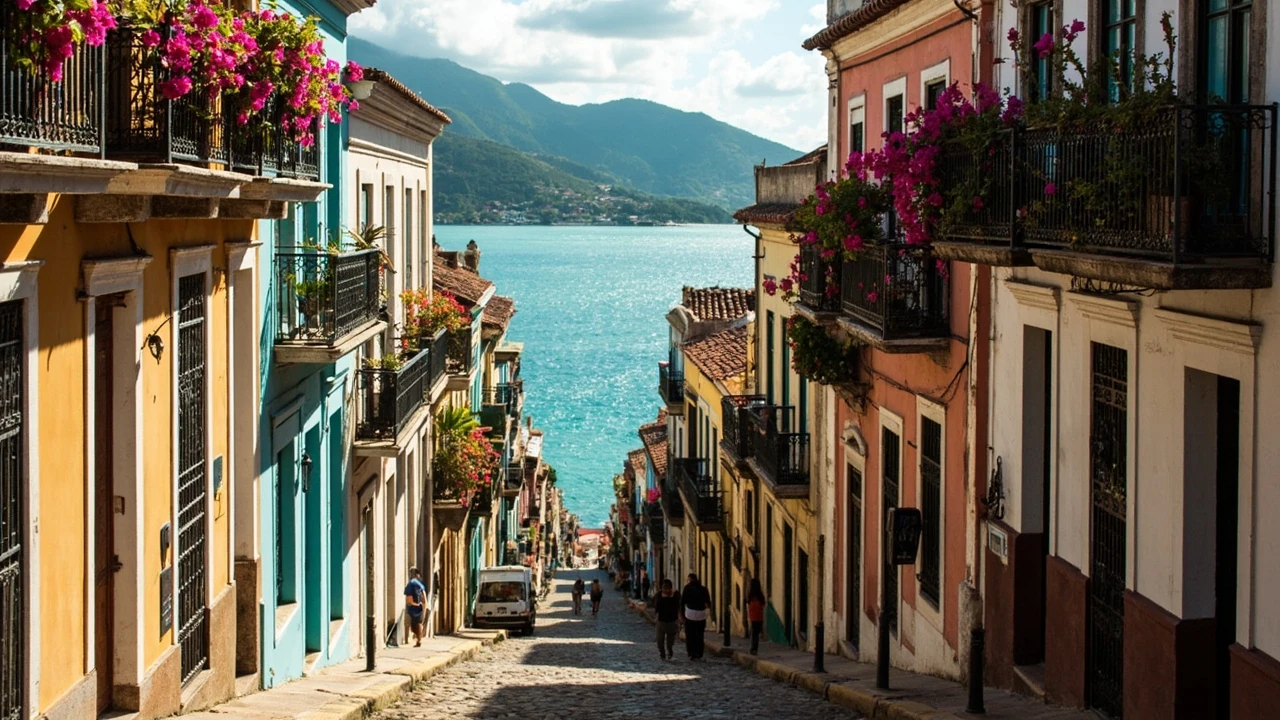
Start with what the destination does well. In Rio de Janeiro, for example, distinguish between major visitor districts, residential neighborhoods, and communities with distinct local identities. In Salvador, explore the relationship between historic architecture, Afro-Brazilian culture, and contemporary urban life. In the Amazon, work with locally operated guides and understand how a visit affects the communities that receive travelers.
- Choose a specific relationship with the place. Select a neighborhood, food tradition, music scene, historical period, or community-led activity instead of trying to collect every famous sight.
- Learn the local context first. Understand the region’s history, common terms, and current community concerns before asking residents to explain them.
- Use locally led experiences. A guide or host from the area can explain not only what visitors see but also who is absent from the standard story.
- Allow unplanned conversation. Leave room for recommendations and corrections instead of adhering rigidly to a list of cultural stops.
- Do not treat poverty as a backdrop. Be aware of the conditions in which people live, but interact as an equal guest and avoid intrusive photography.
- Support local businesses and artists. Spending with a neighborhood restaurant, workshop, performer, or guide is more useful than treating culture as a free show.
- Follow local guidance. Hosts and residents often know when a neighborhood, ceremony, or natural area should not be visited or photographed.
Timing can change the experience. A neighborhood restaurant may be lively at lunch but quiet at midafternoon. Carnival streets may be accessible to visitors while family rituals continue elsewhere. Religious celebrations may open community spaces during one part of the year and be especially meaningful for people who maintain the tradition throughout the year.
For travelers using English-language resources, it is also helpful to remember that foreign guides often simplify complex histories for a short visit. Look for material produced by Brazilian museums, universities, cultural institutions, and community organizations whenever possible. The official text of Brazil’s federal constitution provides a primary-source reference for the country’s federal structure and civic framework, while local sources are usually better for understanding how a specific community experiences those institutions.
Some travelers also benefit from comparing Brazil with other destinations without turning one country into a model for another. A thought-provoking look at South Korea beyond its neon city landmarks can sharpen the realization that a country’s identity is not contained in a handful of familiar images. A similar comparison with Panama beyond the canal shows how much can be missed when a destination is reduced to one celebrated feature.
A practical travel plan for understanding Brazil people
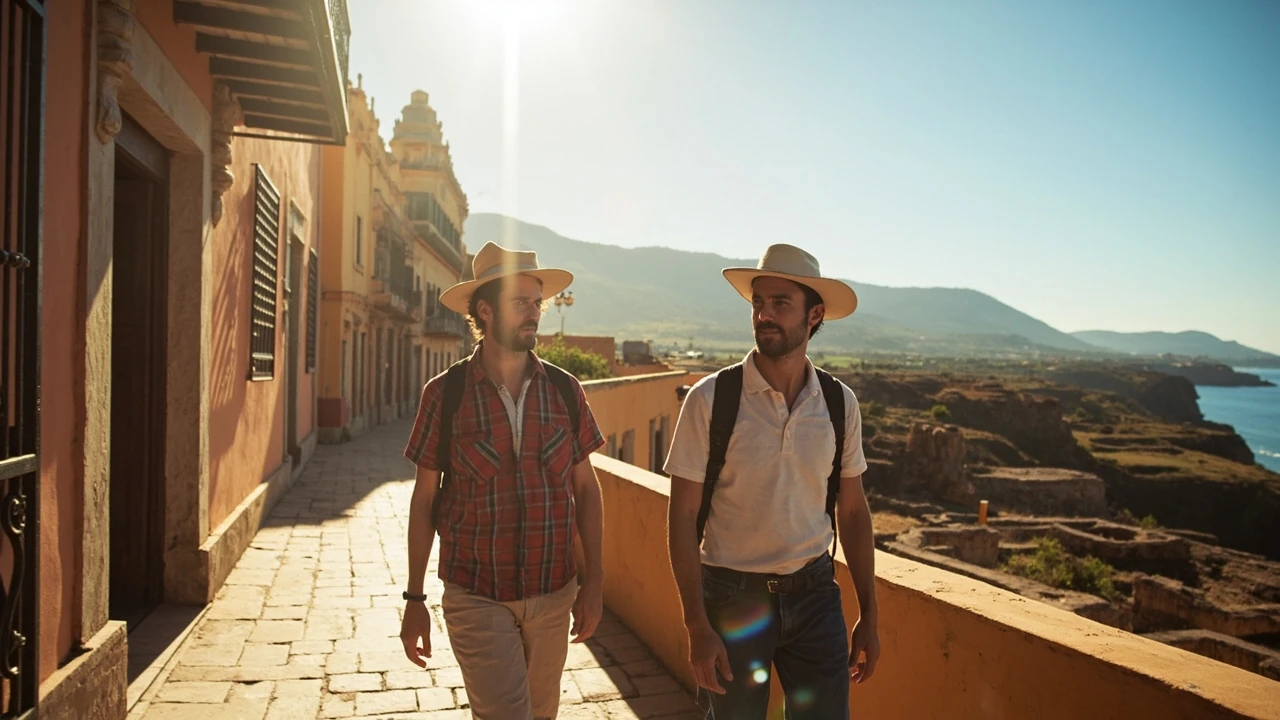
A visit focused on culture should balance observation with participation. Choose one major city, one region with a different history, and enough time to repeat a familiar activity. The goal is not to collect different versions of “Brazil people.” It is to notice how people describe their own identities and how communities differ from one another.
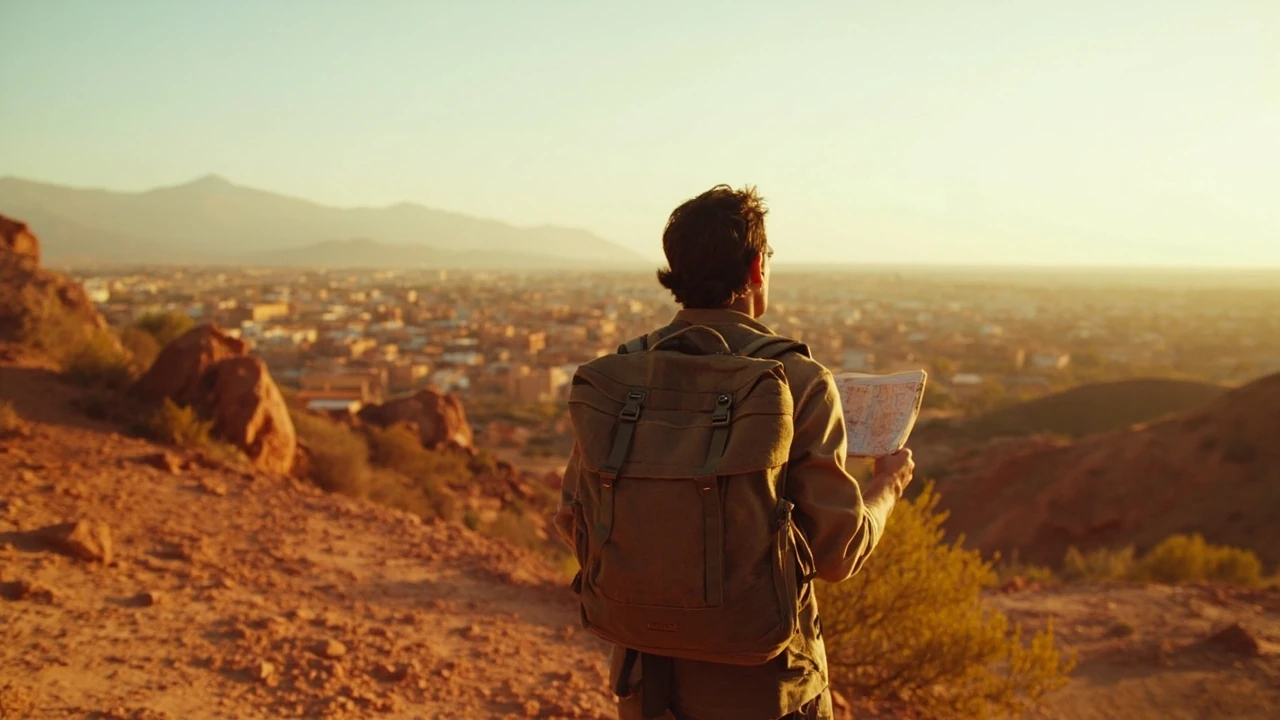
Before arrival, learn a few words of Portuguese and research the regions on your itinerary. Identify the local foods, music traditions, and celebrations that have a genuine connection to the places you will visit. If a festival is important, check its official schedule and understand whether it is primarily religious, civic, commercial, or community-led.
| Travel stage | Preparation | Question to carry with you |
|---|---|---|
| Before departure | Learn basic Portuguese, identify regional histories, and check official event information. | What makes this place different from other parts of Brazil? |
| Arrival | Observe how people speak and interact before drawing conclusions about the local culture. | Which words, foods, or customs feel especially local here? |
| During the visit | Use local guides, ask permission before photographing, and spend time beyond the busiest visitor centers. | What do residents value here, and what changes are they seeing? |
| At meals and events | Learn basic hosting customs and agree on how to handle dietary needs. | How does this celebration bring people together? |
| After returning | Reflect on specific conversations and avoid reducing the destination to a few social media impressions. | Which assumptions did the trip challenge? |
Allow time for ordinary interaction. Repeated visits to the same café, market, or neighborhood produce a different understanding from a fast itinerary. People become less likely to be treated as unfamiliar scenery when the visitor returns, recognizes faces, and shows genuine interest in continuing the relationship.
Be careful when comparing neighborhoods. Areas associated with tourist attractions can also be residential, and economic conditions vary block by block in major cities. A guide can provide perspective, but avoid asking them to prove that the city is either “dangerous everywhere” or “completely safe.” Focus on practical choices: accommodations, licensed transportation, known routes, daylight for unfamiliar walks, and advice from local hosts.
Language learning works best when it supports curiosity rather than performance. A few accurate words can open a conversation, but mispronunciation should not cause embarrassment for either person. Keep a translation app available for less familiar situations while trying to understand simple phrases yourself.
Finally, separate observation from judgment. Some customs may feel surprising because they differ from those in the United States. Others may resemble customs the traveler already knows. Brazil people are not a problem to solve or a contrast used to define another country. They are individuals and communities with their own memories, disagreements, ambitions, and forms of hospitality.
Frequently asked questions
What language do Brazil people speak?
Portuguese is the official language and the primary language of everyday life, education, government, and business. Brazil also has communities that speak Indigenous languages and other languages, while many urban residents understand some English. Regional accents and informal vocabulary can differ considerably. A visitor who knows basic Portuguese will have an easier time ordering food, using public transportation, and following conversations outside major tourist areas.
Is Brazil a diverse country?
Yes. Brazil’s population reflects Indigenous histories, Portuguese colonization, the forced migration of millions of Africans, European immigration, internal migration, and more recent arrivals from Latin America and elsewhere. That diversity exists across regions, cities, families, and social groups. It does not mean every neighborhood or individual reflects the entire national experience, which is why regional and personal context matters.
Are Brazil people generally friendly toward tourists?
Many visitors encounter warmth, curiosity, and generous hospitality, especially when they show basic respect. Individual preferences vary, and highly touristic places can also produce impatience toward disruptive behavior. A polite greeting, interest in the local community, and willingness to follow instructions generally create a better reception than expecting unlimited access or assuming English will always be available.
What should I know about Brazilian family culture?
Family relationships often extend beyond the nuclear household. Extended relatives, godparents, close friends, and people from the same hometown may all play important roles in a person’s social life. Meals and celebrations can be communal and may begin later than an American visitor expects. Avoid treating one family’s habits as universal, and ask before making assumptions about hierarchy, gender roles, or personal boundaries.
How should I discuss race and ethnicity respectfully?
Do not assign a person’s ethnicity based on appearance, skin tone, name, or accent. Brazil is racially diverse, and individual identity may be complicated or private. When race is relevant to a specific place, history, or event, listen carefully and use the language the community uses. It is also unhelpful to expect a person to explain Brazil’s complex racial history on demand.
What religion do Brazil people practice?
Christianity has a strong public presence, especially Catholicism and several Protestant traditions. Afro-Brazilian religions and other spiritual practices are also important to many communities, while some people are agnostic or atheist. Religious identity varies by region and individual. Visitors should not assume a person’s beliefs from appearance and should follow rules concerning dress, photography, speech, and conduct at religious sites.
What is a respectful way to try Brazilian food?
Choose a restaurant with good hygiene and a clear menu, and tell the server about allergies or dietary restrictions. Start with familiar dishes while remaining open to regional specialties. If you are invited to someone’s home, accept at least a small taste when practical and compliment the food sincerely. Food can reveal local history, but one meal should not be treated as representative of every Brazilian household.
Can visitors take photographs of local people?
Ask first whenever a person is close enough to notice, and always ask before photographing Indigenous people, children, religious participants, performers, market vendors, or people in vulnerable circumstances. Some communities and events prohibit photography for cultural or religious reasons. A clear request such as “May I take a photo?” is better than raising a phone and waiting for a reaction.
How do I avoid stereotypes when talking about Brazil people?
Focus on specific communities, places, and contexts rather than making claims about an entire national personality. Use people’s own descriptions when they are willing to share them, acknowledge differences within groups, and avoid assuming that music, food, or celebration alone explains a person’s identity. The best conversations are curious but not extractive: they leave room for complexity and make room for the other person to define their own experience.
What is the best way to learn more about Brazilian culture?
Combine local experiences with reliable context. Spend time in a neighborhood rather than only visiting the country’s headline attractions, seek out community-led tours, and ask thoughtful questions at restaurants, museums, cultural centers, and community events. For sensitive topics, use Brazilian and community-based sources rather than relying only on an outside summary. Learning a few Portuguese words will also make local resources and daily conversations easier to access.
Leave a Reply