
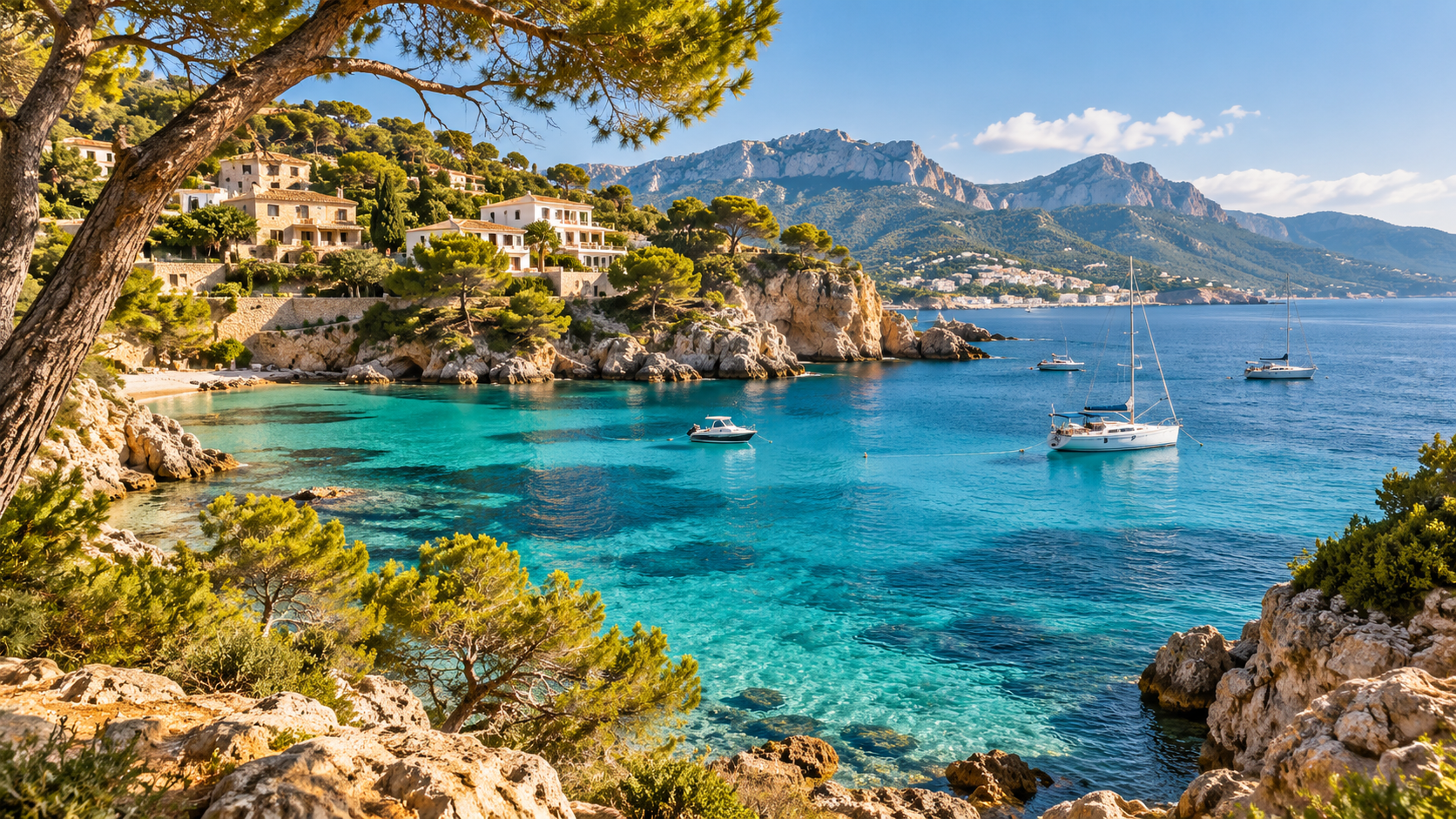
The Balearic Islands are easy to stereotype.
Ibiza means clubs. Mallorca means package hotels. Menorca means quiet beaches. Formentera means turquoise water and not much else.
That version is neat.
It is also way too simple.
This Mediterranean archipelago off Spain’s eastern coast has four main inhabited islands – Mallorca, Menorca, Ibiza, and Formentera – and each one has its own rhythm.
Mallorca can give you Gothic architecture in the morning, mountain roads at lunch, and a hidden cove by late afternoon.
Menorca feels slower and greener, with prehistoric stone monuments and long stretches of protected coastline.
Ibiza really does have legendary nightlife, but it also has fortified old streets, quiet villages, pine-covered hills, and an important marine ecosystem.
And Formentera?
Formentera is the place that makes people stop talking for a second when the water comes into view.
If you are planning a trip from the United States, the biggest mistake is treating the Balearic Islands as four versions of the same beach destination.
They are not.
Where Are the Balearic Islands?
The Balearic Islands sit in the western Mediterranean Sea and form an autonomous community of Spain.
The four main islands most travelers encounter are Mallorca, Menorca, Ibiza, and Formentera.
Mallorca is the largest and most varied.
Menorca lies farther northeast.
Ibiza and Formentera sit to the southwest and are often grouped together geographically as part of the Pityusic Islands.
There are also smaller islands and islets scattered around the archipelago, including Cabrera south of Mallorca.
| Island | Best Known For | Best Match For |
|---|---|---|
| Mallorca | Mountains, Palma, beaches, villages | First-time visitors and mixed trips |
| Menorca | Quiet coves, nature, prehistoric sites | Families, hikers, slower travel |
| Ibiza | Nightlife, Dalt Vila, beaches | Nightlife plus culture and coast |
| Formentera | Clear water, small scale, beaches | Relaxed beach trips |
Mallorca Is the Island That Has a Bit of Everything
If you are unsure which Balearic island to visit first, Mallorca is the easiest answer.
It has the most range.
The island gives you a real city, mountain villages, long sandy beaches, tiny rocky coves, vineyards, olive groves, nightlife, hiking, historical sites, and some surprisingly dramatic roads.
You can make Mallorca feel luxurious.
You can make it outdoorsy.
You can make it a family vacation.
You can also spend four days doing almost nothing except swimming and eating bread with olive oil.
No judgment.
Palma Deserves More Than an Airport Transfer
Palma de Mallorca is the capital of the Balearic Islands and often gets treated like a place you pass through on the way to a resort.
That is a waste.
The old city is walkable and layered with history.
Its most famous landmark is the Cathedral of Santa Maria of Palma, usually called La Seu.
The enormous Gothic cathedral rises above the waterfront and dominates the skyline.
Inside and around it, you can see how centuries of architecture overlap.
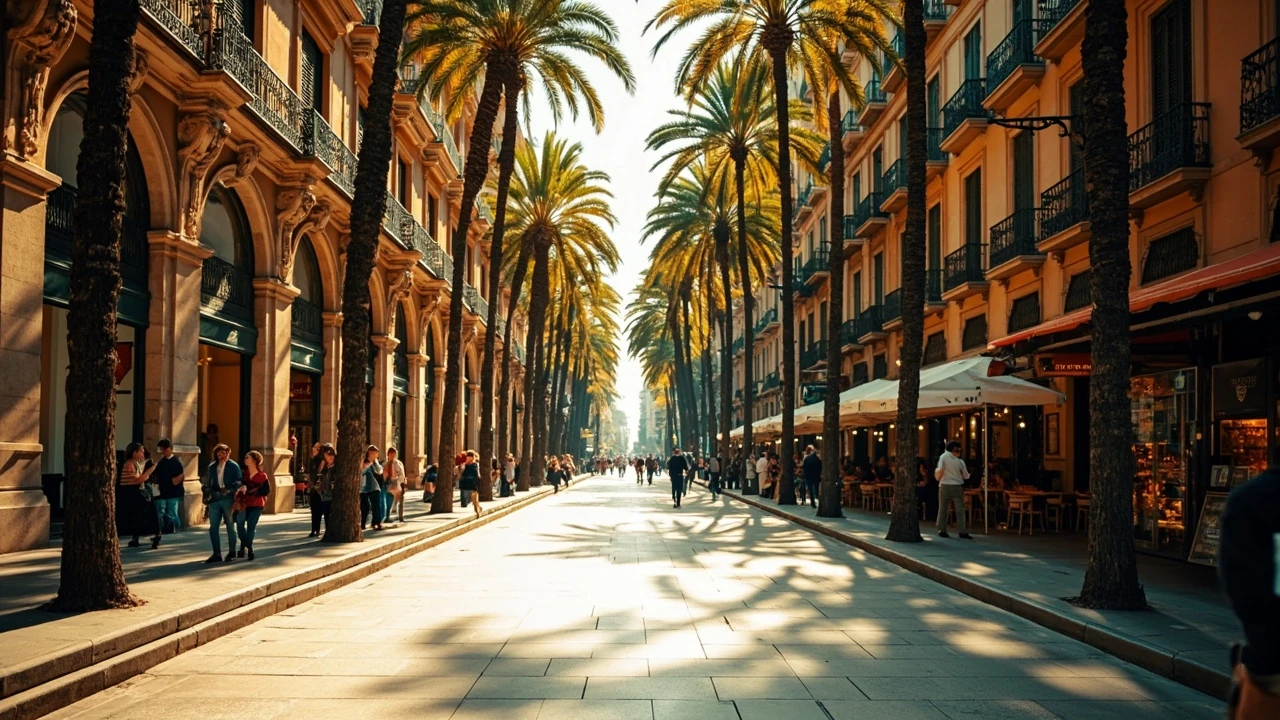
Nearby streets twist through old neighborhoods filled with courtyards, stone façades, cafés, bakeries, churches, and small squares.
Palma also works well at night.
Once day-trippers disappear, the city feels much more lived-in.
The Serra de Tramuntana Changes the Entire Feel of Mallorca
Drive northwest from Palma and Mallorca stops looking like a typical Mediterranean resort island.
The Serra de Tramuntana mountain range runs along the northwestern side of Mallorca.
Sharp ridges, terraced hillsides, olive groves, stone villages, and sea views define the landscape.
The area is recognized as a UNESCO World Heritage cultural landscape because generations of people adapted the difficult mountain terrain through terraces, water systems, dry-stone construction, and agriculture.
That sounds technical.
In person, it looks gorgeous.
Valldemossa and Deià Are the Mountain Villages Everyone Photographs
Valldemossa is built from warm stone and narrow streets in the Tramuntana foothills.
The village is strongly associated with composer Frédéric Chopin and writer George Sand, who spent time there during the 19th century.
Deià, farther along the mountain coast, became associated with artists, writers, and wealthy visitors.
Its stone houses rise on a steep hillside above the Mediterranean.
It is beautiful.
It is also not a secret.
If you visit in summer, expect company.
Sóller Gives You Mountains, Oranges and a Historic Train
Sóller sits in a fertile valley surrounded by mountains and has long been associated with citrus growing.
The historic rail connection between Palma and Sóller is part transportation and part attraction, passing through mountain scenery on the way north.
From Sóller, you can continue toward Port de Sóller on the coast.
This is one of those Mallorca days where you start in a city, pass through mountain tunnels, eat lunch beneath orange trees, and end beside the sea.
Not bad for one island.
Mallorca’s Best Beaches Are Often Called Calas
A cala is essentially a cove or small inlet.
And Mallorca has a lot of them.
Some are sandy and easy to reach.
Others sit below cliffs and require a walk.
Coves such as Cala Deià, Cala Mondragó, Cala Agulla, and Caló des Moro often appear in travel photography.
The most famous ones can get extremely crowded in summer.
That matters more than people realize.
A beach that looks empty in a promotional image may have parking limits, walking access, and a lot of towels by 11 a.m.
Menorca Is Quieter, but “Quiet” Does Not Mean Boring
Menorca has a different personality.
The island is smaller and generally feels less intensely developed than Mallorca or Ibiza.
Beaches and coves are a major attraction, but nature and archaeology play a much bigger role than many first-time visitors expect.
The landscape ranges from pine-backed coves to open countryside and rocky coastline.
Even the road system makes things feel slower.
You tend to move across Menorca rather than race around it.
Ciutadella Is One of the Prettiest Towns in the Islands
Ciutadella sits on the western side of Menorca and served historically as the island’s main city.
The center has narrow streets, stone buildings, churches, small plazas, and a harbor cut into the coastline.
Restaurants gather around the harbor in the evening.
The atmosphere is active without feeling as frantic as major resort zones elsewhere in the Mediterranean.
It is the kind of place where dinner somehow turns into a three-hour event.
Mahón Has One of the Mediterranean’s Great Natural Harbors
Mahón, or Maó, is Menorca’s current capital.
The city sits above a long natural harbor that shaped its military and commercial history.
British influence is still visible in parts of the city’s architecture and local history because Britain controlled Menorca during periods of the 18th century.
That is one reason Menorca feels culturally different from Mallorca even though the two islands are relatively close.
Menorca’s Prehistoric Sites Are Seriously Old
Long before beach clubs and ferry terminals, prehistoric communities were building stone monuments across Menorca.
The island is known for talayots, navetas, and taula sanctuaries.
Some structures date back thousands of years.
You can encounter ancient stone ruins in rural landscapes that otherwise feel almost completely ordinary.
That contrast is part of the charm.
A quiet road, a stone wall, some grazing animals – and then a prehistoric monument.
The Camí de Cavalls Lets You Walk Around Menorca
The Camí de Cavalls is a historic coastal route that circles Menorca.
Today it is used for hiking, trail running, cycling on suitable sections, and accessing remote coastal landscapes.
You do not need to walk the entire route.
Individual stretches are enough to reach coves and viewpoints away from parking areas.
Pack more water than you think you need.
Mediterranean sunshine has a way of making short walks feel ambitious.
Ibiza Is More Than Nightclubs – Much More
Ibiza has one of the strongest nightlife reputations on Earth.
Large clubs, international DJs, beach parties, and late nights have shaped the island’s global image for decades.
That part of Ibiza exists.
But it occupies only one part of the island.
Drive north or inland and the scenery changes quickly.
Pine forests, whitewashed villages, farms, small beaches, and rugged coastal viewpoints replace the party imagery.
You can have a completely peaceful Ibiza vacation if you want one.
You just should not book the room directly beside a superclub and act surprised later.
Dalt Vila Is Ibiza’s Historic Heart
Ibiza Town, often called Eivissa, rises around the fortified historic district of Dalt Vila.
Massive Renaissance-era walls surround the upper city.
Inside are narrow lanes, stone stairways, viewpoints, old houses, restaurants, and historical buildings.
The climb can be sweaty in summer.
The views make a strong argument for doing it anyway.
Dalt Vila forms part of Ibiza’s UNESCO World Heritage property along with archaeological and natural elements elsewhere around the island.
Ibiza’s UNESCO Status Includes the Sea
This is one of the more interesting facts about Ibiza.
The UNESCO property called Ibiza, Biodiversity and Culture is both cultural and natural.
It includes archaeological sites, the fortified upper town, and marine areas known for Posidonia oceanica seagrass meadows.
Posidonia is not just seaweed drifting around beaches.
It is a Mediterranean seagrass that forms important underwater habitats and plays a major role in marine ecosystems.
Those clear blue waters are not simply pretty backgrounds.
There is a functioning ecosystem underneath them.
Ibiza’s Northern Side Feels Like a Different Island
North Ibiza is quieter and more rural.
Small villages such as Sant Joan de Labritja sit among wooded hills and farmland.
Coves are tucked beneath cliffs.
Roads wind through pine forests.
Some travelers come to Ibiza and never enter a major nightclub at all.
That sounds almost rebellious given the island’s reputation.
Formentera Is the Small One People Fall in Love With
Formentera has no large city and no major international airport.
You normally arrive by sea, most commonly from Ibiza.
That immediately changes the mood.
The island is small, relatively flat, and easy to explore without the sense of endless resort development found in some Mediterranean destinations.
Beaches are the main draw.
The water can be astonishingly clear.
White sand, low dunes, pine and juniper vegetation, and shallow turquoise water create the visual style people associate with Formentera.
Ses Illetes Looks Almost Caribbean
Playa de Ses Illetes is one of Formentera’s most famous beaches.
The sand sits on a narrow stretch of land with clear water nearby on both sides in parts of the area.
The colors can look tropical rather than Mediterranean.
During summer, boats gather offshore and the beach attracts plenty of visitors.
Go early if you want that peaceful postcard feeling.
Formentera Works Beautifully by Bike
Because the island is small and relatively flat, bicycles and e-bikes are practical ways to explore.
There are routes connecting villages, beaches, salt flats, and rural landscapes.
That does not mean every midday ride in August is pleasant.
Heat is still heat.
Plan longer rides for mornings or late afternoons and save peak sun hours for the water.
Which Balearic Island Should You Pick?
- Choose Mallorca if you want the widest mix of city, mountains, beaches, food, and nightlife.
- Choose Menorca if you want nature, quiet coves, history, and a slower pace.
- Choose Ibiza if you want nightlife but still care about beaches, culture, and scenery.
- Choose Formentera if your priority is clear water, cycling, and a very relaxed island feel.
- Combine Ibiza and Formentera if you want two very different atmospheres without traveling far.
- Combine Mallorca and Menorca if you prefer hiking, culture, and beaches over clubbing.
Beach Season and Good Travel Season Are Not Exactly the Same
Summer is the obvious high season.
June through August brings hot weather, warm seas, busy resorts, active nightlife, and high demand.
But that does not automatically make July and August the best months for everyone.
Spring and early fall can be excellent.
Temperatures are usually more comfortable for walking, cycling, and exploring towns.
The sea may be cooler, particularly earlier in spring, but beaches can feel dramatically less crowded.
October can still bring pleasant days, though weather becomes less predictable and some seasonal businesses begin reducing hours.
What Does Each Season Feel Like?
| Season | Typical Experience | Best For |
|---|---|---|
| Spring | Mild weather, greener landscapes, lighter crowds | Hiking, cycling, sightseeing |
| Summer | Hot, busy, lively, warm sea | Beaches, nightlife, boating |
| Early Fall | Warm water, softer crowds, mixed weather later | Beach plus sightseeing trips |
| Winter | Quiet, cool, many seasonal venues closed | Local life, hiking, peaceful escapes |
The Balearics in Winter Are a Different Product
Do not expect the full July experience in January.
Many beach-oriented businesses, hotels, restaurants, and nightlife venues operate seasonally.
But winter offers another side of island life.
Palma functions year-round.
Hiking becomes much more comfortable.
Villages feel local again.
Mountain landscapes can be beautiful under cooler light.
If your main goal is swimming every day, winter is not ideal.
If your goal is seeing the islands without peak-season intensity, it can be interesting.
Getting Between the Islands Takes Planning
Ferries connect major islands, and air connections also exist on certain routes.
Ibiza and Formentera are especially easy to pair because Formentera relies on ferry connections.
Mallorca has the broadest range of international flights and is often the easiest entry point for Americans connecting through mainland Spain or another European hub.
Do not treat ferry schedules like a city subway timetable.
Season, route, sea conditions, and operator schedules matter.
Always check the current timetable before building a tightly timed island-hopping itinerary.
Do You Need a Car?
On Mallorca, a rental car can be extremely useful if you want mountain villages, rural beaches, and inland towns.
In Palma alone, a car can feel like unnecessary baggage.
Menorca is also much easier to explore independently with a car if you want remote coves.
Ibiza has buses and taxis, but a rental vehicle helps if you plan to explore quieter inland and northern areas.
Formentera is different.
Scooters, bicycles, e-bikes, and small cars are common ways to get around.
Distances are shorter, and the island suits slower transport.
The Roads Can Be Part of the Experience
Mallorca’s Tramuntana roads are spectacular.
They are also winding.
Very winding.
Drivers who are uncomfortable with mountain roads may discover new muscles in their hands from gripping the steering wheel.
Go slowly.
Do not rush because a local driver appeared behind you.
Find a safe place to let traffic pass when necessary.
What Should You Eat in the Balearic Islands?
The islands have their own food traditions rather than simply copying mainland Spanish cuisine.
Mallorca is associated with ensaïmada, a spiral-shaped pastry that can be plain or filled.
Sobrassada is a soft, seasoned pork sausage strongly associated with the Balearics.
Menorca is famous for Mahón-Menorca cheese, and the island has its own strong dairy tradition.
Seafood appears everywhere, naturally.
Ibiza and Formentera have traditional fish dishes tied to fishing communities.
Local olive oil, almonds, figs, bread, tomatoes, and Mediterranean vegetables also play important roles.
Try More Than Paella
- Try ensaïmada for breakfast or with coffee in Mallorca.
- Look for sobrassada served on bread or incorporated into local dishes.
- Sample Mahón-Menorca cheese at different ages.
- Order local fish when eating near smaller ports.
- Try tumbet, a Mallorcan vegetable dish with potatoes, eggplant, peppers, and tomato.
- Look for local almond-based sweets and desserts.
- Ask what is seasonal rather than automatically ordering the most familiar Spanish dish.
Do People Speak Spanish or Catalan?
Both Spanish and Catalan are official languages in the Balearic Islands.
Local Catalan varieties are part of island identity and may differ between Mallorca, Menorca, Ibiza, and Formentera.
You will see Catalan place names on signs and maps.
In tourist zones, English and other European languages are widely heard.
American travelers can usually manage comfortably in English around major tourism businesses.
A few Spanish phrases are still useful.
And learning a simple local greeting never hurts.
These Islands Have Much More History Than Beach Resorts Suggest
Different Mediterranean powers passed through or controlled the islands over centuries.
Phoenician and Carthaginian influence was especially important on Ibiza.
Romans incorporated the islands into their world.
Islamic rule left major cultural and agricultural influences.
Christian conquest reshaped political control in the medieval period.
Later coastal defenses responded to piracy and conflict across the Mediterranean.
This history explains why you encounter prehistoric stone sites, Gothic cathedrals, fortified towns, watchtowers, and archaeological ruins within relatively short distances.
Cabrera Is Mallorca’s Wild Neighbor
South of Mallorca lies the Cabrera archipelago.
The protected national park includes islands, coastline, and marine habitats.
Boat excursions commonly depart from southern Mallorca during suitable conditions and seasons.
The landscape feels much wilder than heavily developed resort areas.
If you need proof that the Balearics are not one giant beach-hotel strip, Cabrera makes the case pretty quickly.
Respect the Posidonia Meadows
Those dark patches visible beneath clear Mediterranean water are not always rocks or seaweed.
In many areas they are Posidonia seagrass meadows.
These habitats are important for marine life, water quality, seabed stability, and coastal ecosystems.
Boat anchoring can damage them.
Responsible boating rules and designated anchoring practices matter.
You do not need to become a marine biologist on vacation.
Just remember that crystal-clear water stays beautiful partly because healthy ecosystems are doing work underneath it.
How Long Should You Stay?
For Mallorca alone, five to seven days works well.
That gives you time for Palma, the Tramuntana, and several beach or inland days without driving constantly.
Menorca deserves at least four days if you want to explore both ends of the island.
Ibiza can work in three or four days, though five gives you room to see its quieter side.
Formentera works as a day trip from Ibiza, but staying overnight changes the experience dramatically once day visitors leave.
If you want to combine multiple islands, ten days is much more comfortable than one week.
A Good First Balearic Islands Itinerary
- Spend four nights on Mallorca, including Palma and the Serra de Tramuntana.
- Use one or two Mallorca days for coves or inland villages.
- Continue to Ibiza for three nights and split time between Dalt Vila, beaches, and the quieter north.
- Take the ferry to Formentera and stay one night if your schedule allows.
- Save Menorca for a separate slower trip, or add four days if you have two full weeks.
Could you technically squeeze all four main islands into one week?
Sure.
You could also spend your vacation looking at ferry terminals and hotel check-in desks.
FAQ About the Balearic Islands
What are the four main Balearic Islands?
The four main inhabited islands most travelers visit are Mallorca, Menorca, Ibiza, and Formentera. The archipelago also includes smaller islands and islets such as Cabrera.
Which Balearic Island is best for first-time visitors?
Mallorca is usually the easiest first choice because it combines beaches, mountains, Palma, historic villages, nightlife, hiking, and a wide range of hotels and restaurants.
Which Balearic Island has the best beaches?
That depends on what you want. Formentera is famous for clear turquoise water, Menorca has beautiful natural coves, Mallorca offers enormous variety, and Ibiza combines small coves with larger beach areas.
Is Ibiza only for partying?
No. Nightlife is a major part of Ibiza’s international reputation, but the island also has UNESCO-listed heritage, quiet villages, pine forests, coves, archaeological sites, and a surprisingly peaceful northern region.
Can you visit Formentera without staying on Ibiza?
Formentera does not have a commercial airport, so visitors generally arrive by ferry. Ibiza is the most common gateway, and many travelers combine the two islands.
What is the best month to visit the Balearic Islands?
May, June, September, and early October are attractive for many travelers because the weather can be warm while crowds are often lighter than in peak July and August. Exact conditions vary each year.
How many days do you need for the Balearic Islands?
One week works well for one island or a relaxed two-island combination. Ten to fourteen days is better if you want to see several islands without turning the trip into a constant transfer schedule.
The Balearic Islands Make More Sense Once You Stop Comparing Them
The temptation is to ask which island is best.
Mallorca or Menorca?
Ibiza or Formentera?
Which has the best beach?
Which has the best food?
Which one should you skip?
But that misses what makes the balearic islands interesting.
They are close enough to share a Mediterranean climate and cultural history, yet different enough that moving between them can feel like changing vacations.
Mallorca has scale.
You can spend a morning beneath Palma’s cathedral, drive into the Serra de Tramuntana after lunch, and reach a tiny mountain village before sunset.
The next day can be completely about beaches.
Menorca slows things down.
Roads cross farmland and stone walls. Prehistoric monuments sit beside quiet landscapes. Walking paths lead toward coves where the sea changes from deep blue to almost transparent near shore.
Ibiza plays with expectations.
You may arrive thinking about clubs and leave remembering the stone walls of Dalt Vila, a quiet northern cove, or dinner in a small inland village.
Formentera takes away even more noise.
The distances shrink.
The bicycle starts making more sense than the car.
The sea becomes the main event.
And that is probably the smartest way to plan a trip.
Do not chase a checklist of famous beaches.
Give each island enough time to develop its own personality.
Eat somewhere away from the waterfront occasionally.
Get up early for one popular cove instead of complaining about the crowd at noon.
Drive into the mountains.
Walk through a real town after dinner.
Spend at least one evening away from the biggest tourism zones.
And if you are visiting Ibiza, maybe stay awake late once.
You are allowed.
Just remember that the island will still be there the next morning, with pine forests, stone houses, cliffs, and blue water waiting outside the club doors.
The best Balearic trip is not really about finding the “best island.”
It is about matching the island to the mood you want.
Mountains and variety?
Mallorca.
Nature and breathing room?
Menorca.
Energy mixed with culture?
Ibiza.
Clear water and very little urgency?
Formentera.
And if your schedule is generous, do what the islands quietly encourage anyway.
Try more than one.
Leave a Reply