
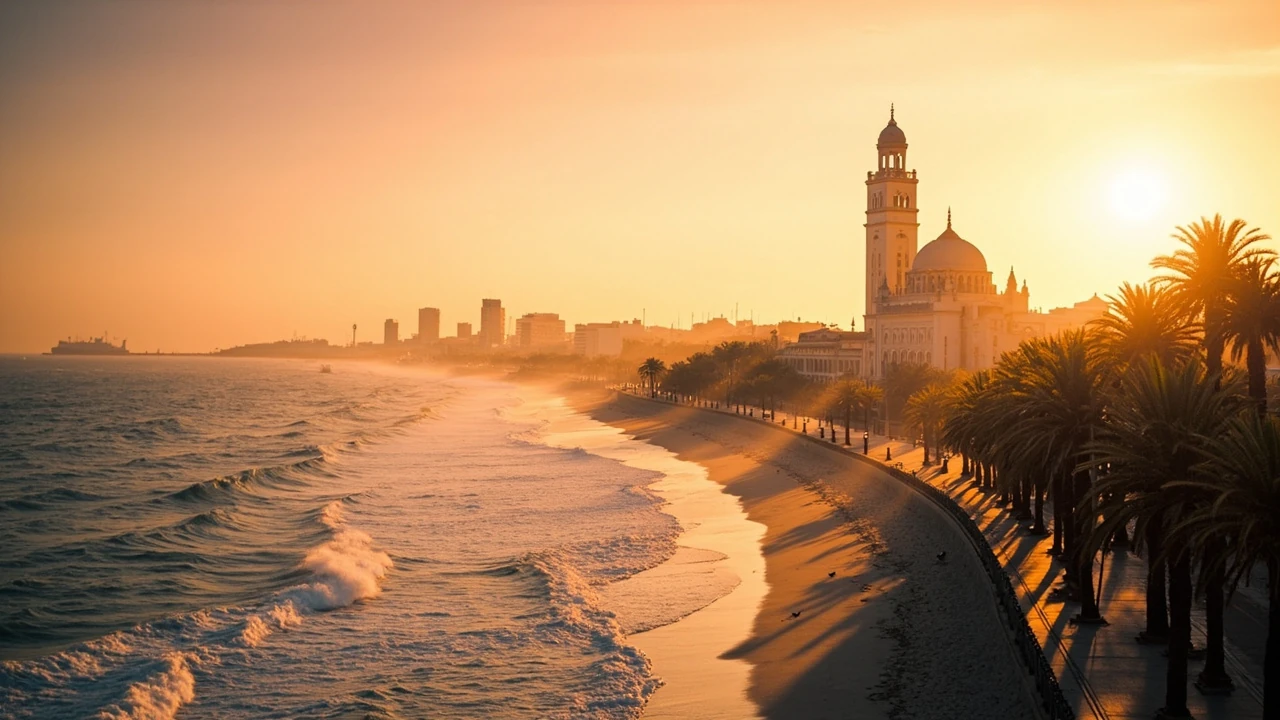
Casablanca country: Which country is the city in?
Casablanca is in Morocco, on the country’s Atlantic coast. It is Morocco’s largest city and its main economic and business center, while Rabat serves as the national political capital. The answer to “casablanca country” is therefore simple, but planning a visit requires understanding how Casablanca differs from a typical stopover destination and how to organize transportation, neighborhoods, and activities efficiently.
Many travelers first encounter Casablanca through an international flight connection and assume it is merely a doorway to another part of Morocco. The city rewards at least a full day and offers a useful combination of coastal scenery, modern architecture, religious landmarks, markets, modern art, and everyday Moroccan life. It is also a practical place to begin a longer journey because it combines a major port with strong business and transport connections.
This guide focuses on a practical visitor intent: what country Casablanca is in, what the city is worth seeing, and how an independent traveler can build a realistic visit. It does not treat the city as a generic North African stopover or as a substitute for Marrakech, Rabat, and the smaller communities farther south.
Is Casablanca worth visiting?
Casablanca is worth visiting when you have enough time to move beyond the airport or central station. Its strongest attractions are spread across distinct experiences: the monumental Hassan II Mosque, the tightly packed lanes of the Old Medina, the broad Corniche waterfront, the clean geometry of Casa-Port, and the white-walled Mohammed V Square. Modern institutions and museums add another layer for travelers interested in design, contemporary art, or Moroccan Jewish history.
The city also offers a useful contrast with Morocco’s tourist centers. Marrakech is often associated with medinas, riads, and traditional craft shopping. Casablanca is more metropolitan, with a port economy, corporate headquarters, large boulevards, contemporary neighborhoods, and a more developed transport network. That does not make it less authentic; it simply means authenticity is found in different details.
The main limitation is time. Trying to combine Casablanca with several major Moroccan destinations in a very short trip can leave the city feeling like a checklist. A short visit is most satisfying when it focuses on two or three areas rather than attempting to cross the metropolitan region for every attraction.
| Traveler priority | Best use of time in Casablanca | What to leave for later |
|---|---|---|
| First visit | Hassan II Mosque, Old Medina, Corniche, and Mohammed V Square | Minor museums or distant excursions |
| Architecture and design | Casa-Port, Mohammed V Square, the Museum of Moroccan Judaism, and modern urban districts | A long market excursion |
| Food-focused trip | Restaurants, market stalls, coastal walks, and a neighborhood lunch | Scheduling too many unrelated attractions |
| Short airport stopover | One central sightseeing route with a clear finish time | Planning a full-day itinerary around a flight |
Casablanca is less compelling when the itinerary depends on an exact flight connection, when the traveler has mobility limits and does not check walking distances, or when every hour is allocated to shopping. It works well for a first introduction to Morocco, a business trip with spare time, or a coastal city break. For travelers comparing national itineraries, Greece history shows how a place gains meaning when its landmarks are connected to social and political changes rather than treated as isolated photo stops.
What to arrange before traveling to Casablanca
Start with the passport and entry rules that apply to your nationality and itinerary. Requirements for United States citizens can change as diplomatic and security conditions change, so use the current guidance published by the relevant Moroccan embassy or consulates and the official electronic visa portal where applicable. Do not rely on an old travel forum answer or an itinerary written before a passport renewal.
Check the current travel advisory, medical guidance, and any conditions affecting the areas included in the trip. Casablanca is a major urban center, but conditions can differ by location, and a traveler should not assume that a city’s international reputation guarantees conditions everywhere in Morocco.
Make these practical arrangements before departure:
- Confirm your passport validity, visa status, and the required length of stay.
- Review current entry, health, customs, and security guidance for your nationality.
- Choose accommodation according to the part of the city you want to explore, not only the nightly price.
- Request airport transfer details for your actual flight and arrival time.
- Download offline maps and preserve copies of your passport, insurance information, and booking confirmations.
- Set a departure buffer if your onward flight is international, especially when leaving the city for another destination.
Morocco’s currency is the Moroccan dirham. Many travelers keep a small amount of cash for taxis, market purchases, tips, and small food businesses, while cards are widely used at many larger hotels, restaurants, and shops. Exchange practices and the availability of ATMs can vary, so check current banking conditions before relying on one method for the entire stay.
Morocco is a Muslim country, and Arabic and Amazigh are official languages. French is widely used in many urban and service settings, and English is more likely to be understood in tourism and business settings than in every neighborhood. A few polite phrases in Arabic can make interactions smoother, but a translation app is a more practical aid than assuming universal English fluency.
| Planning question | Why it matters | Best time to resolve it |
|---|---|---|
| Does the traveler need a visa? | Rules vary by passport and can affect the booking. | Before purchasing nonrefundable tickets |
| Which airport serves the itinerary? | Casablanca has a major international airport outside the dense city center. | Before booking transfers and accommodation |
| How long will the transfer take? | Traffic patterns can affect the time needed between the airport and central districts. | When comparing arrival options |
| Is the stay long enough for a day in town? | Most of the major visitor areas benefit from at least one complete day. | When mapping the broader Morocco itinerary |
| What does the accommodation location save? | Transport time can consume more vacation time than the difference in room rates. | Before selecting a neighborhood |
How to get around Casablanca once you arrive
The easiest way to explore central Casablanca for many visitors is a combination of walking, public transportation, and a taxi or ride-hailing service. The Old Medina, waterfront, central shopping areas, and major architectural sites can be approached on foot, although the compact street pattern can become confusing quickly. Modern districts are much larger, and covering them on foot may require more time than expected.
Public buses and the tram connect parts of the metropolitan area and can be a practical way to experience ordinary local travel. The tram is especially useful for linking the city center with areas along its main corridor. Riders should still confirm current routes, operating hours, payment requirements, and stop locations through local information available at the time of travel.
Small taxis are common for short and medium-distance trips. Agree on the fare before departure if the driver has not started the meter or used an accepted fixed-fare procedure. For longer journeys, a prearranged hotel or tour vehicle may be easier, particularly for a day trip outside central Casablanca. A ride-hailing app can be useful, but service availability and pricing should be checked for the pickup area rather than assumed.
Use a simple route strategy for the first day:
- Begin with the Old Medina and Hassan II Mosque in the morning, when the surrounding streets are easier to navigate.
- Continue toward the Corniche and make the waterfront part of the route rather than treating it as a separate transfer.
- Move to Mohammed V Square, Casa-Port, and nearby design or museum stops later in the day.
- Return to the accommodation area before fatigue or traffic makes navigation difficult.
Road travel in Morocco follows right-hand traffic, but drivers in dense urban areas may change lanes, brake, or merge with less signaling than visitors expect. Pedestrians should look for vehicles before crossing even on familiar streets. Motorbike traffic can be particularly fast around medina approaches, so walking beside traffic is safer than stepping into the lane without direct visibility.
Casablanca’s airport is a substantial distance from the central city, and airport procedures add time beyond the drive itself. Keep the arrival day simple if the flight is late. If the trip continues to another Moroccan city, compare a domestic flight with a train or private transfer based on the next destination, the distance to the final hotel, and the value of saving travel hours.
Which Casablanca neighborhoods and sights deserve your time?
The Old Medina is the most concentrated area for traditional streets, small shops, food stalls, and historic urban texture. Hassan II Mosque is its defining landmark. The mosque stands beside the Atlantic, and its scale, stone detailing, and elevated position make it the city’s most recognizable sight. Interior access can depend on visitor rules and prayer times, so travelers should follow current site guidance rather than expecting uninterrupted admission.
The Corniche stretches along the coast and offers a different experience from the medina. It is useful for a walk, a meal overlooking the water, or an unhurried break between denser neighborhoods. The beach itself is not the sole reason to come. The promenade, changing light, marine air, and view toward the mosque make the waterfront one of the city’s defining public spaces.
Mohammed V Square is another major urban landmark. Its broad open space and surrounding modern buildings contrast strongly with the Old Medina. The area is useful for orientation and for seeing how Casablanca presents itself as a modern commercial capital. Casa-Port, meanwhile, gives a clearer picture of the city’s contemporary architecture and relationship with the port.
The Museum of Moroccan Judaism offers a more focused cultural visit. Its location and exhibitions connect Morocco’s Jewish communities, history, and broader cultural identity. Because interpretation depends on a specific exhibition program, confirm what is open and what themes are currently featured before making it the centerpiece of the day.
Casablanca should not be confused with the similarly named Casamance region in southern Senegal. For this page, casablanca country means the Moroccan city of Casablanca. A For additional context, New7Wonders city profile further identifies Casablanca as Morocco’s largest city, an Atlantic port, and the country’s principal economic center.
Visitors seeking a wider comparison can also use the approach in Panama tourist attractions: each destination should represent a distinct setting or experience rather than repeat the same visual theme.
| Area or attraction | Main experience | Best time to visit | Practical note |
|---|---|---|---|
| Old Medina | Traditional streets, shops, food, and dense city atmosphere | Late morning | Expect narrow walkways and limited vehicle access |
| Hassan II Mosque | Monumental architecture and an Atlantic setting | Morning | Check current visitor and prayer-time rules |
| Corniche | Coastal walk, restaurants, and open views | Late afternoon or early evening | Allow extra time for the distance between stops |
| Mohammed V Square | Modern urban design and central orientation | Midday | Combine with nearby architectural stops |
| Casa-Port area | Contemporary commercial architecture | Afternoon | Plan for modern road crossings |
| Museum of Moroccan Judaism | Community history and museum exhibitions | Opening hours | Verify current exhibitions before visiting |
What should you eat, and how should you approach daily costs?
Casablanca’s food ranges from market stalls and neighborhood cafés to polished restaurants serving Moroccan and international menus. Because casablanca country means Morocco, the local table is best approached through Moroccan dishes rather than a search for imported or familiar food. Common choices include tagine, couscous, pastilla, grilled meats, vegetable dishes, bread, and pastries adapted to the season and the restaurant.
At a busy place, it is normal for the meal to unfold in stages rather than arriving all at once. Bread or another starter may appear first, followed by a shared dish or individual plates, then tea, mint, or another final item. Drink choices and prices vary widely. Ask for the bill and confirm service charges if you want to understand the total, especially in an unfamiliar restaurant.
Travelers with dietary restrictions should communicate them clearly in advance where possible. Vegetarian choices exist, but a dish that appears meatless may still use stock or animal fat unless the restaurant confirms otherwise. People with serious allergies should carry suitable medication and explain the allergy in a way staff can understand rather than assuming a menu translation covers every ingredient.
A daily cost depends on the accommodation category, restaurant choices, transport method, and shopping habits. Rather than publish a fixed budget that may quickly become inaccurate, it is more useful to divide spending into controllable categories.
- Accommodation: the largest and most variable part of most trip budgets.
- Food: compare a mix of casual meals with occasional higher-end dining.
- Local movement: use a combination of walking, public transit, and taxis instead of a vehicle for every short journey.
- Paid experiences: check current museum, guide, and tour fees directly.
- Shopping and extras: set a personal limit before browsing markets or design stores.
Casablanca offers more expensive international dining and luxury shopping than smaller Moroccan cities, but a careful traveler can control costs by eating where the clientele matches the planned budget and by limiting taxis to transfers where they save meaningful time. Never choose a restaurant solely because it appears closest to a major attraction; a short ride can lead to better value and a more comfortable meal.
During hot weather, schedule the medina and exposed walking for the cooler part of the day, carry water, and take shade breaks. During cooler months, a light layer is useful because coastal conditions can feel different from the inland parts of Morocco. Current local forecasts should guide the exact schedule because coastal wind and urban temperatures can change from day to day.
Is Casablanca safe for visitors?
Casablanca is a large city where visitors can move through the main tourist districts, business centers, waterfront, and markets while using normal situational awareness. Most concerns are ordinary urban travel issues rather than a reason to avoid the city: pickpocketing in crowded places, distractions used by street sellers, aggressive taxi drivers, road crossings, and unofficial vendors who do not want to be asked to leave.
Use these precautions as part of normal travel planning:
- Keep your phone, wallet, and documents secure in crowded stations, markets, and transit areas.
- Stay alert during anyone asking for help, especially if your attention is drawn away from your belongings.
- Agree on taxi fares or use the accepted fare procedure before starting the trip.
- Wear footwear suited to uneven medina paving and carry water during longer walks.
- Keep normal copies of important documents separate from the originals.
- Follow official local advice after any incident rather than relying on unverified social media posts.
Hospitality is part of Moroccan social life, but the interaction remains a relationship between two people. Politeness matters. Greetings before beginning a transaction, a restrained response to persistent sales pressure, and a clear refusal followed by moving away usually work better than an argument. Travelers should not photograph people without permission, particularly in religious areas, small workshops, or residential neighborhoods.
Dress for the setting. Modest clothing is the safest practical choice around religious sites and conservative neighborhoods, while the waterfront and central business districts are generally more relaxed. Even in warm weather, lightweight layers make it easier to adapt when entering a mosque, where clothing and behavior rules may require additional coverage.
Current security guidance should always take priority over general impressions. If a specific neighborhood, road, or event has an official warning, travelers should adjust the itinerary rather than trying to find an informal workaround.
How to build a three-day Casablanca itinerary
A three-day visit is enough to see the essential contrasts without rushing across the city. The plan below assumes a traveler staying in or near the central area. Anyone based farther out should add transfer time and avoid trying to fill every available hour.
| Time | Day 1: Old city and waterfront | Day 2: Modern Casablanca | Day 3: Culture and open time |
|---|---|---|---|
| Morning | Old Medina and Hassan II Mosque | Mohammed V Square and Casa-Port | Museum of Moroccan Judaism |
| Midday | Lunch in the medina or nearby | Architectural walk and lunch | Local café, market revisit, or nearby neighborhood |
| Afternoon | Corniche walk | Design district or scheduled museum | Shopping and flexible sightseeing |
| Evening | Dinner and sunset waterfront walk | Dinner in a modern district | Final meal near the accommodation |
On day one, keep the Old Medina and Hassan II Mosque together because the mosque provides a clear orientation point. Walk without forcing a shopping stop at every doorway, then continue toward the water when the route permits. The Corniche is best treated as a destination with time to sit, photograph the coastline, and watch the city rather than simply a path between two attractions.
Day two highlights the more contemporary city. Start around Mohammed V Square, continue to Casa-Port, and compare the scale and materials with the Old Medina. If the traveler prefers organized context, use a local guide for part of the route; if the preference is independence, use a map and walk between major points.
Day three should include one focused cultural stop and an unscheduled block. Fatigue is common in Morocco when travelers underestimate heat, traffic, and the number of streets in a medina. Leaving the final afternoon open makes it possible to revisit a favorite area, shop without rushing, meet someone, or simply rest before an onward journey.
Do not schedule a long day trip immediately before an international flight. Casablanca’s metropolitan area extends well beyond the central districts, and the airport transfer can take longer than a map’s straight-line distance suggests. If the onward destination is only a short flight away, a morning flight may still require an early departure; compare the airline’s advised airport arrival time with the route you actually need to take.
Should you choose Casablanca instead of another Moroccan destination?
Choose Casablanca when you want a major city, Atlantic access, contemporary design, business travel, a port atmosphere, or a practical starting point for a broader Moroccan itinerary. It is especially suitable for travelers who prefer urban museums, food, and modern neighborhoods to mountain scenery or extended rural travel.
Choose Rabat when your priority is Morocco’s political capital and governmental institutions. Choose Marrakech for the intensity of its historic medina, traditional architecture, craft culture, and tourism-focused atmosphere. Choose Fes for a strong emphasis on traditional craftsmanship and historic educational sites, and choose Chefchaouen for a smaller, mountainous setting associated with blue-painted streets.
Choose Essaouira instead when the priority is a compact coastal escape, seafood, wind, and a more relaxed pace. The choice does not have to be absolute. A common Morocco itinerary uses Casablanca as an arrival or departure city, then travels inland for several days. Another pattern places Casablanca near the beginning of the trip, allowing the traveler to adjust after experiencing the country’s urban side.
The city’s size is the point. Casablanca does not need to compete with smaller places on intimacy. It offers something more useful to many visitors: a place where old religious architecture, modern urban design, port commerce, and contemporary cultural institutions occupy the same metropolitan area.
As with other cities that receive more visitors than smaller destinations, advance planning matters. Travelers who want a specific museum, dining style, or guided area should confirm it rather than assume availability. It is also useful to compare the national itinerary with how another large destination handles crowds and dispersal; the Balearic Islands offer a useful example of why an archipelago is better understood as several distinct destinations than as one interchangeable stop.
Frequently asked questions
What country is Casablanca in?
Casablanca is in Morocco. It is the country’s largest city and an Atlantic port, while Rabat is the national political capital. When searching for casablanca country, use Morocco when checking visas, currency, entry rules, and travel advice.
Is Casablanca the capital of Morocco?
No. Rabat is the political capital. Casablanca is the largest city, the main business and economic center, and Morocco’s chief port. A visit to Casablanca can therefore be independent of a trip to Rabat.
How many days should I spend in Casablanca?
At least one full day is the practical minimum for the major central sights. Two days allow a more relaxed pace and one cultural attraction, while three days are better for travelers who also want neighborhoods, museums, shopping, and an unhurried coastal visit.
Is the Old Medina safe to explore?
The Old Medina is a major visitor area and can be explored with normal travel awareness. Stay alert in crowded lanes, keep valuables secure, ask before photographing people, and expect narrow passages and confusing street patterns. Visiting in the morning can make navigation easier.
Can I visit Hassan II Mosque as a non-Muslim visitor?
Visitors are generally welcome when the site is open for tourism, but admission rules can change and prayer periods may affect access. Dress modestly, follow instructions at the entrance, and avoid entering prayer spaces during services. Check current guidance before arrival.
Do I need a car to visit Casablanca?
A car is rarely necessary for central sightseeing. Walking, public transportation, and taxis are usually more convenient in dense districts. A vehicle or organized tour becomes more useful for a day trip outside the center, especially when several distant stops are involved.
What is the best time to visit Casablanca?
Spring and autumn often offer comfortable conditions for walking, but the best choice depends on personal priorities and current forecasts. Summer travelers should protect the middle of the day from heat, while cooler-season visitors should bring layers for the coast and evenings.
What should I pack for a Casablanca trip?
Pack comfortable walking shoes, lightweight layers, modest clothing for religious and traditional settings, sun protection, and a refillable water bottle. A small day bag is more practical than a large handbag in crowded areas. Travelers should also prepare for occasional cool coastal evenings and mild rain depending on the season.
Can I leave for another Moroccan city after visiting Casablanca?
Yes. Domestic flights, trains, and organized road transfers connect Casablanca with other destinations. Compare the time required to reach the next hotel, not just the ticket price or travel duration. Keep a generous buffer when the next trip continues to an international flight.
What is the most important thing to know before visiting Casablanca?
Check your nationality’s current visa and entry requirements, read official travel guidance, and plan transportation before arrival. Beyond those essentials, allow enough time to experience the city on foot rather than treating every landmark as a fast photo stop. Current entry, airport, and attraction details should always be confirmed through official information.
Leave a Reply