
Tourist attractions in Panama: where to start
A short trip to Panama can include cobblestone streets in a historic capital, rainforests where howler monkeys call at sunrise, and Pacific beaches with enough surf to shape an entire day. A longer itinerary can add Indigenous communities, offshore islands, and remote parts of the Darién. The country’s greatest advantage is its compact mix of landscapes, but that same variety makes careless planning easy: beaches, mountains, wildlife areas, and urban neighborhoods may look close on a map while requiring very different amounts of time and travel.
This guide compares the main tourist attractions in Panama by setting, experience, and practical tradeoffs. It is designed to help you choose a route before booking transport or accommodation. The goal is not to list every possible stop, but to identify which places suit a short city break, a nature-focused vacation, an island escape, or a more demanding expedition.
Panama’s geography also explains the country’s distinctive range of experiences. Panama City sits on the Pacific side, with a modern skyline and a tightly packed historic center. The Boquete highlands and their surrounding valleys are cooler and greener. Along the Caribbean, Bocas del Toro offers a car-free archipelago of islands, beaches, mangroves, and coral reefs. Farther east and south, Coiba, San Blas, and the Darién reward travelers who accept longer journeys in exchange for deeper contact with marine or forest environments.
Which Panama attractions match your kind of trip?
The best place to begin is not a famous landmark but the experience you want most of the day. Some travelers prefer architecture, food, and short walks between neighborhoods. Others want reefs, hiking, wildlife watching, or a physical sense of distance from cities. Panama can deliver all of these, but fitting them into one short itinerary may mean spending too much time in transit.
| Travel style | Best-fit areas | Main attraction | Important tradeoffs |
|---|---|---|---|
| First-time city visit | Panama City and Casco Viejo | Historic streets, museums, skyline views, food, and the canal area | Traffic and heat can make careful transport choices important |
| Short beach vacation | Santa Catalina, Las Lajas, or Bocas del Toro | Beaches, water activities, and a slower pace | Surf conditions, island transfers, and weather vary by season |
| Nature and wildlife | Boquete, Sendero Los Quetzales, Coiba, and the Darién | Cloud forests, birds, marine life, and protected landscapes | Wildlife cannot be guaranteed; some areas require guides and advance planning |
| Culture-focused travel | Panama City, Emberá communities, Guna communities, and historic routes | Local history, food, craft traditions, and community-led experiences | Ask locally about appropriate visits and responsible operators |
| Longer exploratory journey | Panama City, Boquete, Bocas, and one more distant destination | A varied route with mountains, coast, and islands | Travel days consume vacation time, and weather can disrupt connections |
A useful decision is to choose one primary environment and treat everything else as optional. For example, a visitor with only four days might spend two in Panama City, one in Boquete, and one near the Caribbean. Someone who values marine wildlife more than urban sights could instead base the entire visit around Bocas and one organized offshore excursion. This approach creates a coherent trip rather than a collection of distant stops.
Consider the pace as well as the destination. Panama City rewards walking in the early morning and evening, while Boquete is better treated as a base for a series of outings. Bocas del Toro works well when you are comfortable moving between islands by boat and accepting that plans depend partly on the sea and sky. The Darién is a different proposition entirely: it is for travelers who value remoteness, have time, and understand that access can be complicated.
- Choose Panama City if architecture, dining, history, and convenient days are your priorities.
- Choose Boquete if mountain scenery, coffee landscapes, birding, and outdoor days matter more than nightlife.
- Choose Bocas del Toro if your ideal afternoon involves a beach, paddleboard, reef, or small island.
- Choose Coiba, San Blas, or the Darién only when the journey itself is part of the experience.
Panama City and Casco Viejo: the most accessible attractions
Panama City is the easiest place to build a first trip around because it combines urban attractions, major museums, restaurants, transport links, and the historic district of Casco Viejo in one area. The city also works as a base for day excursions to the Panama Canal and the Pearl Islands. That convenience does not mean the city deserves only a rushed overnight stop. Older waterfront neighborhoods, restored architecture, contemporary public spaces, and the city’s layered history can occupy several days.
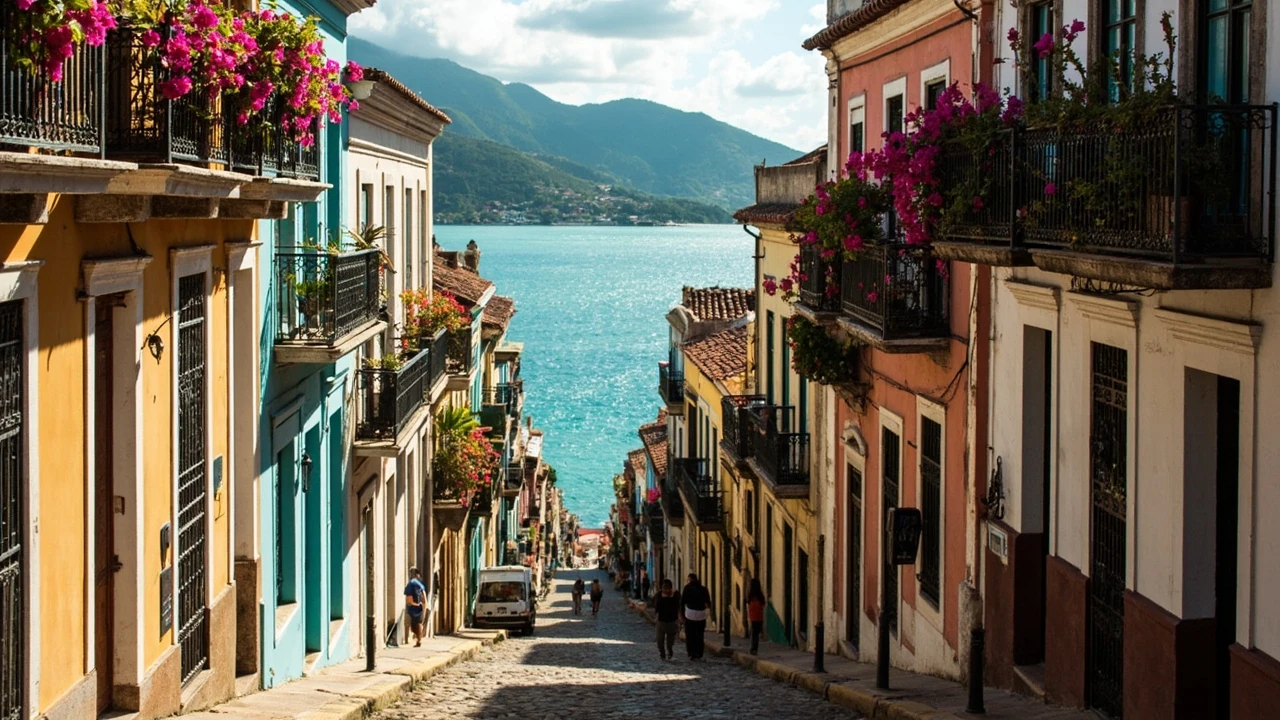
Casco Viejo is the obvious starting point for visitors interested in history and photography. Its narrow streets, brightly painted buildings, balconies, churches, and worn stone surfaces reveal a port city built through several periods of expansion and renewal. The best approach is not to drive directly from landmark to landmark. Walk without a fixed route, enter courtyards and public spaces, and leave time for cafés, street vendors, and changing views toward the bay.
Nearby Panama Viejo provides a useful counterpoint. This older part of the city contains the remains of an earlier urban center, including stone fortifications and ruins that help explain why the modern capital developed farther west. Together, Casco Viejo and Panama Viejo make the city’s history more understandable than either neighborhood alone.
The canal area remains the country’s best-known attraction, but it is more than a viewpoint. Miraflores Visitor Center explains the locks and the engineering required to move ships across the isthmus. A canal transit, when operating and available to visitors, places travelers on a working waterway rather than beside it. Treat transit availability as something to verify for the travel date; schedules, vessel operations, and access arrangements can change.
The Amador Causeway provides another waterfront perspective. Walking or cycling portions of the route gives views toward the city, the bay, and the canal approaches. Because this is an exposed urban waterfront, morning or late-afternoon visits are often more comfortable than a midday walk.
For travelers interested in how the country presents its natural and cultural diversity, the Biomuseo is a convenient city-based starting point. It focuses on Panama’s ecosystems and the relationship between biodiversity and human communities. The museum is particularly useful when a short itinerary includes only a few days in the capital because it provides context before a longer trip into the highlands, islands, or Darién.
Food is not a separate add-on in Panama City. It is one of the clearest ways to understand the city’s geography and history. Central American, Caribbean, Afro-Panamanian, Indigenous, and international influences overlap here. Rather than trying to identify every regional dish in one meal, choose restaurants with a clear specialty and ask what they recommend. A day in the city can include breakfast in a neighborhood market, lunch focused on one local tradition, and dinner near the waterfront or another residential district.
The Pacific coast and Boquete highlands: where landscapes change quickly
West of Panama City, the Pacific side of the isthmus changes quickly from dense city to green hills, small towns, cattle country, fishing communities, and exposed beaches. The area is especially good for travelers who want a mixture of outdoor scenery and an easy connection to the capital. Santa Catalina and the Las Lajas area provide a coastal counterpoint to the skyscrapers and traffic of Panama City.
Santa Catalina draws surfers because the Pacific receives consistent swell, while nearby beaches appeal to travelers looking for a slower seaside setting. The right base depends on your priorities: staying closer to the surf points, choosing a quieter stretch of coast, or splitting time between the two. Surf conditions and water conditions vary, so confirm local guidance rather than relying on a travel photograph.
Boquete is the main mountain base. The town sits in a green valley, and the surrounding highlands offer a different rhythm from the coast. Coffee farms, cool mornings, forest walks, and views toward both coastlines make the area appealing even for travelers who do not plan a strenuous hike. The BBC description of Boquete as a place for mountain-grown coffee and climbing Volcán Barú captures two common motivations, though the latter should be approached with proper preparation rather than treated as a casual walk.
Volcán Barú is the headline hiking destination. The approach involves elevation gain and changing conditions, so the route, weather, and visitor guidance should be checked locally. The reward is a wide view over the isthmus and both oceans on a clear day. Some visitors use the road area for a shorter scenic stop, while others undertake a guided climb with an experienced operator. These are meaningfully different activities.
Sendero Los Quetzales provides the stronger appeal for birders and naturalists. The reserve is known for cloud-forest habitat and the resplendent quetzal, a bird that can be difficult to locate even when conditions are favorable. The walk is more about the forest, birding, and changing mountain scenery than about reaching a monumental viewpoint. A local guide can improve the odds of seeing wildlife and understanding how the reserve protects habitat.
Other highland villages and farms can be included, but the area is not a collection of interchangeable stops. Ask local guides about farms open to visitors, walking routes, wildlife observation, and road conditions. Small operations can change their schedules or access based on weather and business, so flexible booking and responsible questioning are better than treating a listed attraction as guaranteed.
| Destination | Best time of day | Ideal focus | Preparation |
|---|---|---|---|
| Santa Catalina | Early morning for uncrowded conditions; late afternoon for a softer coastal mood | Surf, beach walks, and a relaxed Pacific base | Check surf reports, bring reef-safe sun protection, and confirm transport |
| Boquete | Morning for outdoor conditions; afternoon for town and café stops | Coffee country, gardens, gentle walks, and mountain scenery | Allow weather flexibility and use reputable local guides for hikes |
| Volcán Barú | Early start | Volcanic summit and views across the isthmus | Confirm route conditions, fitness needs, and guide requirements |
| Sendero Los Quetzales | Early morning | Cloud forest and birding | Expect variable visibility and carry rain protection |
Bocas del Toro: choosing islands and activities wisely
Bocas del Toro is Panama’s best-known island destination, but “Bocas” is a province and archipelago rather than one attraction. Most visitor activity is based around the main island of Isla Colón and the smaller islands nearby. The destination is defined by water: beaches sit beside mangrove channels, coral gardens, wooden docks, and restaurants that can only be reached by boat or water taxi.
That setting rewards travelers who value spontaneity and marine experiences. It can frustrate those who want a fixed room with quick land access or a tightly scheduled daily itinerary. Weather affects boat journeys, and a trip to a particular island or reef may depend on sea conditions. Plan the main destination first, then treat specific activities as flexible elements.
Isla Colón provides the broadest selection of services and a good base for travelers who have never visited Panama. From there, water taxis connect nearby settlements, beaches, and tour departure points. Red Frog Beach is well known, but it is not the only beach experience in the archipelago. Some travelers prefer quieter islands, snorkeling sites, or stays that place them directly on the water.
For a compact look at the country beyond the canal, the BBC Travel feature Panama’s highlights beyond the canal provides useful context for the balance among city life, rainforest, beaches, and wildlife.
The best way to compare island days is by activity rather than by a single “best island” label:
- Choose the larger, busier islands when you want restaurants, excursions, water taxis, and a broad selection of lodging.
- Choose a smaller island when seclusion, swimming, and a slower daily rhythm matter more than convenience.
- Choose a snorkeling or diving excursion when healthy reef conditions and marine wildlife are the priority, but leave room for cancellation if conditions are poor.
- Choose a mangrove tour when understanding shallow coastal ecosystems is more interesting than a conventional beach day.
Wildlife encounters in Bocas are opportunistic rather than guaranteed. Rays, sharks, reef fish, and other animals may be present, but no operator can promise a specific sighting on a given day. That uncertainty is part of the island experience. Good guides explain the ecosystem, avoid crowding animals, and do not treat wildlife as props.
Playa Bonita, Zapatilla, and other island excursions offer alternatives to the developed parts of Isla Colón, but access and available services vary. Before choosing an excursion, ask where the boat starts, how long the transfer takes, what equipment is included, what happens if weather changes, and how much time remains for swimming or walking. These practical questions are more useful than a checklist of generic island activities.
Panama’s mainland Caribbean coast also contains quieter alternatives around Changuinola and nearby areas. They are less convenient for a quick island itinerary but may suit travelers who prefer a slower, less resort-oriented stay. Distances on the map should not be treated as travel times: the road is interrupted by the canal crossing, and the archipelago sits beyond it by water.
Coiba, San Blas, and the Pearl Islands: choosing an offshore experience
Panama’s offshore attractions answer different travel needs. Coiba is primarily a large protected marine environment with an emphasis on wildlife and natural landscapes. The Pearl Islands offer an archipelago setting associated with history, fishing communities, and island beaches. San Blas, on the Caribbean side, is associated with the Guna people and is a place where visitors should approach tourism through community-operated services rather than treating it as a generic tropical escape.
Coiba is often linked to former penal-colony history, an aspect that makes the island’s natural and human histories inseparable. The BBC account describes its large marine protected area, dolphins, whales, turtles, crocodiles, snakes, and bird life, while also noting that island communities maintain their own relationship with the place. A visit should therefore include more than a checklist of marine species. Responsible operators should explain both the ecosystem and the island’s difficult history.
Trips to Coiba generally require more travel planning than a visit to Bocas del Toro. Availability, weather, lodging arrangements, and suitable excursions can affect whether a day trip or overnight stay works. Travelers should verify the exact itinerary with a reputable operator and avoid assuming that a map showing a route reflects the likely day’s experience.
The Pearl Islands sit closer to Panama City and offer a different combination of maritime history and island scenery. Former canal-construction and pearl-industry history gives the islands a distinct story, while boat trips can add opportunities for snorkeling and wildlife watching. The best choice depends on whether you want a historical focus, a marine focus, or a short break with minimal time spent in transit.
San Blas requires particular care in how tourism is arranged. The Guna community has developed its own tourism model, including lodging and excursions managed locally. Availability is commonly controlled through the community system rather than the open hotel-and-tour booking system used elsewhere. Visitors who approach bookings through the appropriate local channel can support the community while gaining access to offshore islands, beaches, and cultural experiences.
| Offshore destination | Primary appeal | Best for | Planning priority |
|---|---|---|---|
| Coiba | Marine wildlife and protected natural landscapes | Naturalists and travelers seeking a remote island experience | Confirm transport, lodging, and excursion details well ahead |
| Pearl Islands | Island scenery and maritime history | Visitors wanting a varied day trip from the capital region | Compare operators and choose the focus of the boat itinerary |
| San Blas | Island scenery and community-run tourism | Travelers interested in locally organized cultural and coastal experiences | Use the appropriate community booking and payment process |
Do not treat these destinations as interchangeable versions of Bocas. Coiba emphasizes wild marine settings and remoteness, the Pearl Islands connect more closely with Panama City and maritime history, and San Blas operates within a distinct Indigenous tourism system. Choosing among them starts with identifying which system and landscape interests you most.
The Darién: remote travel with real logistical demands
The Darién is Panama’s largest and most remote southern region, containing extensive rainforest and historically complicated travel terrain. It is not simply another beach or wildlife reserve added to a standard vacation. For travelers with suitable time, guidance, and realistic expectations, it can provide an exceptional sense of landscape and place. For a short trip or a visitor unwilling to accept uncertainty, it is a poor fit.
The BBC feature describes the Darién as a place where primeval scenery meets contemporary realities, noting both spectacular rainforest opportunities and serious threats to forests. It also highlights Emberá and Wounaan communities in Panamá Province and the Darién national park. That combination matters: the region cannot be separated into scenery and society, because forests, rivers, villages, and livelihoods are interconnected.
Travel in the Darién may involve overland movement, river crossings, boats, and local guides. The exact sequence changes with conditions and is not something a general itinerary can safely promise. Independent travel without appropriate local knowledge can create problems for visitors and place unnecessary pressure on communities. A locally connected operator or guide is usually more valuable than a long list of sightseeing stops.
Wildlife possibilities are substantial, but sightings remain uncertain. The region supports exceptional biological diversity, yet rain, river levels, noise, and the movement of animals make every expedition different. Guides should be transparent about what can realistically be seen and should set ethical rules around wildlife encounters, camp behavior, waste, and community relations.
- Allow more travel days than the destination’s time on the ground requires.
- Use local operators who can explain current access and community expectations.
- Carry appropriate equipment rather than relying on a rental outfit to anticipate every condition.
- Keep plans flexible because weather and river conditions can alter the route.
- Do not promise specific animals, border crossings, or village visits in advance.
A sensible compromise for many visitors is to dedicate the Darién to a guided expedition while keeping the rest of Panama relatively straightforward. Panama City, Boquete, and Bocas can each anchor a separate part of the trip, but squeezing all of them into a short itinerary can leave too little time in the southern region to benefit from it.
How to build a route that works in practice
A Panama itinerary should be organized around travel days, not simply a list of destinations. The country is compact, yet the canal crossing divides overland journeys into separate northern and southern stretches, and offshore trips add their own schedules. As a result, two attractions on the map may be separated by a meaningful journey through terrain that is unfamiliar to many visitors.
Start with the number of full days available. Subtract arrival and departure time, then decide how many days can be spent moving. A short visit may support Panama City plus one regional excursion. A week allows a more convincing split between the capital and either Boquete or Bocas. A longer journey can accommodate a more demanding Pacific or Caribbean route, although each additional transfer should earn its place.
| Trip length | Comfortable structure | What to leave out |
|---|---|---|
| 2–3 days | Panama City, Casco Viejo, the canal area, and one nearby experience | Multiple distant islands, the Darién, and attempts to cover both coasts |
| 4–6 days | Panama City plus either Boquete or Bocas del Toro | Adding both a mountain region and a major archipelago without travel time |
| 7–10 days | Two or three contrasting regions with dedicated travel days | A daily schedule that leaves no recovery or weather margin |
| 11 days or more | A coordinated city, coast, and island itinerary, possibly including Coiba or the Pearl Islands | Rushing the Darién solely to add another place to the list |
Next, decide how you will move. A rental car is useful for some Pacific and highland routes, but it is not an automatic advantage in Panama City, where traffic and parking can dominate the experience. Public transportation and organized transfers can make more sense in the capital. Boquete and Bocas may work well with transfers rather than a car. Offshore destinations require boats regardless of how you reach their departure point.
Build activities into a day in small blocks. In the city, group nearby neighborhoods rather than alternating between distant attractions. In Boquete, group outdoor activities according to weather and elevation. In Bocas, keep one flexible day for marine conditions and avoid placing a nonrefundable commitment immediately before an important boat transfer.
Finally, check practical information close to the trip. Confirm attraction access, operator credentials, community booking procedures, weather outlooks, and any park or site notices. Do not rely on an old blog post for a schedule that may have changed. The same principle applies to fees: although prices are not the main decision here, they should be confirmed with the attraction or operator rather than assumed from an outdated travel post.
Related travel perspectives for building a balanced itinerary
Panama rewards travelers who look beyond its most recognizable landmark, but regional planning still deserves attention. For a wider view of the country’s culture, geography, and attractions, the guide to Panama is much more than the canal provides useful background before you divide the country into shorter trips.
The same planning principle applies to other destinations with a strong central city and varied regions. South Korea has far more than neon Seoul offers a parallel reminder that one metropolitan highlight should not stand in for an entire national itinerary. Comparing destinations can sharpen the choice between a city-focused visit and a route that gives meaningful time to landscapes and local communities.
Frequently asked questions
What are the best tourist attractions in Panama for a first visit?
For a first visit, combine Panama City and Casco Viejo with either Boquete or Bocas del Toro. Panama City provides history, museums, food, and transport connections. Boquete adds mountain scenery and nature, while Bocas del Toro adds islands, beaches, and marine activities. Trying to include the Darién or several remote islands on the same short trip often creates a route made mostly of transit.
How many days are enough to visit Panama?
Three days can cover the capital and one nearby excursion. A week allows Panama City plus one contrasting region with a less rushed pace. Longer trips make Coiba, the Pearl Islands, San Blas, or a guided Darién journey more practical. The best duration depends on how many travel days you are willing to spend, not simply the number of nights.
Is the Panama Canal worth visiting?
Yes, especially if you are also spending time in Panama City. A visitor center can explain how the locks work, while an available canal transit offers a different perspective from a ship passing through the area. Verify the current visitor options and transit arrangements before your visit because operations and access can change.
Which Panama destination is best for families?
Panama City and Bocas del Toro generally offer the broadest range of services and shorter activity choices. Boquete can suit families who prefer scenery, animals, and gentle outdoor days, though route planning is necessary. The best choice depends on the ages of the children, the tolerance for boat travel, and whether the family prefers urban facilities or outdoor excursions.
Do I need a rental car to visit Panama?
Not for every itinerary. Panama City is easier to explore with organized transport, walking, and taxis, while transfers can simplify trips to Boquete and Bocas del Toro. A car may be helpful for certain Pacific or highland routes, but it adds traffic, parking, and driving responsibilities. Choose transportation based on the route rather than assuming a car will save time everywhere.
Can I visit San Blas and the Pearl Islands on the same trip?
They can appear in one longer itinerary, but they sit on opposite sides of the isthmus and offer very different experiences. The Pearl Islands have stronger connections to Panama City and maritime history, while San Blas uses a distinct community-led tourism system on the Caribbean side. Trying to see both in a short vacation can mean spending most of the time traveling.
Is the Darién suitable for a short Panama vacation?
Usually not. The region involves serious travel demands, including remote access and dependence on local knowledge and conditions. It is better suited to a dedicated expedition with flexible plans and a knowledgeable local operator. A visitor who wants wildlife and rainforest without logistical complexity will usually find more satisfaction in Boquete, Sendero Los Quetzales, or a marine trip elsewhere.
What is the best time to visit Bocas del Toro?
There is no single answer for every traveler. Conditions that suit swimming, boating, or hiking can change through the year, and the right time depends on your planned activities. Check current marine and weather conditions, compare accommodation availability, and leave some flexibility. Beach time remains central, but a boat-dependent itinerary needs a weather margin.
How many wildlife species will I see in Panama?
The number varies dramatically by destination, season, weather, activity, and luck. Panama supports exceptional biological diversity, but no responsible guide should guarantee a fixed list of animals. Choose experiences that emphasize habitat and expert interpretation rather than promises of a perfect sighting. The destination itself remains rewarding even when a particular species does not appear.
What should I pack for a multi-region Panama trip?
Pack for the regions included in your route. Lightweight clothing works in the city and warm coast, while the highlands can be cooler and wet. Bring rain protection, dependable walking shoes, sun protection, insect repellent, and a light layer for boats or air-conditioned vehicles. Use locally available insect protection and follow health guidance for any destination where mosquito-borne illness is a concern.

Leave a Reply