
La Rambla Barcelona guide: what to expect along the route
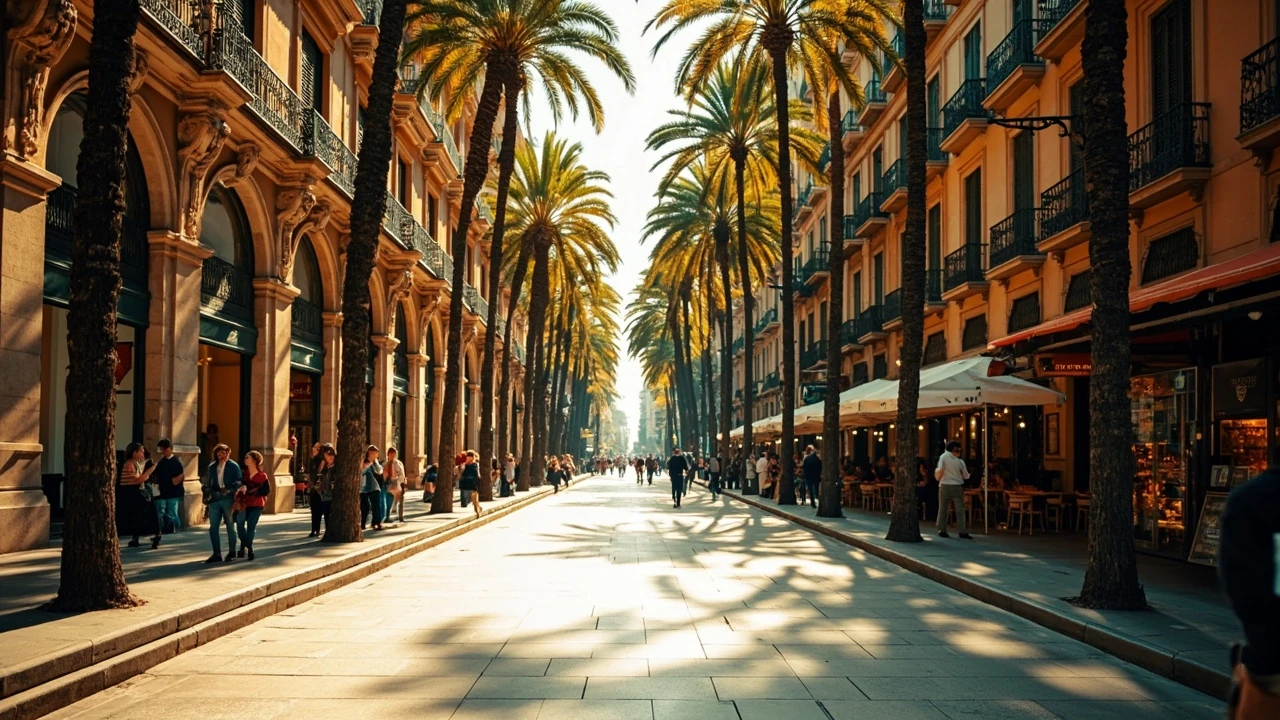
A first visit to la rambla can feel surprisingly varied. One moment you may be walking beneath trees and historic facades near Plaça Catalunya; farther south, the street opens into busy commercial blocks filled with souvenir shops, cafés, terraces, street performers, and visitors moving toward the waterfront. The route is not simply one long promenade. It passes through several distinct sections, and each offers a different balance of architecture, shopping, dining, crowds, and connections to nearby neighborhoods.
La rambla is best treated as the spine of a walking day rather than an isolated attraction. Start in the northern part if you want a gradual introduction and the most generous choice of civic spaces. Continue south if the Port Vell end and waterfront atmosphere are your priorities. If you are short on time, focus on a clearly defined route instead of trying to absorb every block.
| Visitor priority | Best starting point | Route emphasis | Useful pause |
|---|---|---|---|
| First-time overview | Plaça Catalunya | Walk south along the main pedestrian corridor | La Boqueria and the surrounding lanes |
| Architecture and photography | Plaça Catalunya | Focus on facades, upper-floor details, and tree-lined blocks | Sant Just and the historic center |
| Food and market browsing | La Boqueria area | Explore the market edge and adjacent side streets | El Raval or the Gothic Quarter |
| Waterfront finish | Central la rambla | Continue south toward Port Vell | Harborfront promenade |
How to plan your route from Plaça Catalunya to the waterfront
A north-to-south walk is the easiest way to understand la rambla because it follows the street’s natural progression from the city center toward the harbor. Start at Plaça Catalunya, orient yourself using the surrounding architecture, and then walk south. There is no need to hurry through the first blocks; the changes in scale, paving, trees, and street activity can be as memorable as the major landmarks.
Allow at least a couple of hours for a straightforward visit. That estimate includes time for photographs, café stops, market browsing, public toilets, and watching street activity rather than moving directly from one landmark to another. Three hours works well for a relaxed first visit. A half day gives you room to explore the neighborhoods on either side. A full day is unnecessary unless you are combining the walk with a meal, a museum, or a longer waterfront excursion.
Use this sequence as a flexible checklist rather than a rigid schedule:
- Begin at Plaça Catalunya to get your bearings and decide whether the northern section deserves more time.
- Walk through the upper boulevard without stopping for shopping, allowing time to notice the architecture and street performers.
- Reach the market district and decide whether you want to enter La Boqueria, browse its edge, or continue along side streets.
- Explore El Raval or the Gothic Quarter for a short detour beyond the main commercial frontage.
- Return to the main route and continue toward the Columbus Monument and the waterfront.
- Finish at Port Vell, where you can continue along the harbor or choose a waterfront restaurant for a late meal.
If you are traveling with children, an older relative, or anyone who tires easily, split the route into two shorter walks. The northern half can end around the market and Raval, while the southern half begins around the Columbus Monument and reaches the harbor. This avoids turning the entire visit into a test of endurance.
The route also works in reverse. Beginning near Port Vell can make the visit feel less like an approach to the city and more like a gradual arrival at its historic center. That order is especially appealing for visitors who plan to end the day with dinner or a show in the center. The trade-off is that the harbor-facing end is busiest when many day-trippers are beginning their return journeys.
Key sights along la rambla from north to south
La rambla has enough major sights to justify a clear order. Most first-time visitors will recognize the street as a sequence rather than a single viewpoint. The sights below work as landmarks for navigation, each one leading naturally into the next section of the route.
| Landmark or area | Position along the route | What visitors will notice | Planning note |
|---|---|---|---|
| Plaça Catalunya | Northern starting point | A large civic space and a broad view of the central city | Use it as an orientation point and meeting place |
| Historic upper boulevard | Between Plaça Catalunya and the market | Grand facades, trees, balconies, and street performance | Take time for the architecture before the busiest retail stretch |
| La Boqueria | Central section, opening onto the boulevard | A busy food market with produce and prepared-food stalls | Visit outside the peak meal period if you value a calmer browse |
| El Raval | Immediately west of the market area | Independent shops, narrow lanes, and neighborhood cafés | Use a side-street detour to escape the main promenade |
| Sant Just | Just south of the market district | A small historic square and a change in the street’s character | Pause briefly before rejoining the busier southern section |
| Columbus Monument | Near the transition toward the harbor | A prominent monument and a reference point for the waterfront | Allow time for crowds and photographs |
| Port Vell | Southern endpoint | Harbor views, maritime atmosphere, and pedestrian connections | Continue along the waterfront or return by public transport |
The buildings are part of the attraction, but their visual impact comes from the sequence. Above the market, the corridor feels more formal, with taller facades and a more orderly street profile. Around La Boqueria and El Raval, storefronts and projecting signs bring the street closer to commercial activity. Farther south, the surroundings open gradually toward the harbor, giving the walk a clearer destination.
Photographers should treat these changes as a progression. A wide street-level frame near Plaça Catalunya emphasizes the scale of the boulevard. A tighter composition among the upper blocks can isolate architectural details. Around the market, movement and storefront colors create a more energetic street photograph. At the southern end, the harbor provides depth and an open horizon. Trying to capture every quality from one position is less effective than walking the route and noticing how each section changes.
Do not plan every minute around photographing landmarks. The street’s appeal also lies in ordinary observations: upper-floor balconies, café terraces, fruit displays, musicians, pigeons, and the shifting relationship between architecture and pavement. These details help explain why la rambla remains one of Barcelona’s defining visitor streets rather than merely a corridor connecting attractions.
Which neighborhoods are worth a detour from the main boulevard?
The most rewarding detours are usually short. La rambla is easy to navigate, but staying on it continuously can give an incomplete sense of Barcelona. The surrounding center contains historic lanes, small squares, independent businesses, and quieter pockets that reward a change of pace.
El Raval is the most convenient side trip for many visitors because it begins at the western edge of La Boqueria. Its identity is broader than one famous street. The area includes portions of the old city, residential lanes, cultural institutions, and areas associated with nightlife. That mixture means the experience changes from block to block. Walk with attention, keep valuables secure in crowded areas, and avoid treating every narrow lane as a private shortcut without considering where it leads.
Sant Just is the quieter choice. The small square provides a pause beside the main route and is useful when the commercial stretch feels overwhelming. It also works well as a meeting point for a group with different walking speeds. From here, a short exploration of nearby streets can reveal more of the medieval street pattern before returning toward the harbor.
The Gothic Quarter lies east of the central section and is best treated as a longer optional extension. Its narrow streets, church façades, small squares, and irregular blocks contrast with the long perspective of la rambla. Visitors who want the best street-level experience of old Barcelona can leave the main boulevard at the market area, work through the Gothic Quarter, and rejoin closer to the southern section.
Choose no more than one major detour unless you have a full day. Trying to cover El Raval, the Gothic Quarter, and every point along the harbor in a short visit creates a route that is busy but not especially rewarding.
- For a two-hour visit: Walk straight from Plaça Catalunya to the Columbus Monument, then continue to the harbor.
- For three to four hours: Add El Raval or the Gothic Quarter, not both.
- For a relaxed half day: Walk slowly north to south, include a proper meal, and spend extra time at the waterfront.
- For families: Use the market area, Sant Just, and the harbor as the main stops, with a short café or rest break between them.
A broader Mediterranean itinerary can pair the city walk with coastal destinations. For example, travelers considering a longer Spain itinerary may compare Barcelona with the distinct island experiences described in The Balearic Islands Are Not Just One Kind of Vacation. Barcelona and the Balearics require different amounts of travel time, so the comparison is useful before adding another destination to the same trip.
How to reach la rambla and move on after the walk
Public transport is usually the easiest way to begin. Barcelona’s metro and suburban rail network connect the city with major arrival points and provide convenient options around the center. Taxis and ride-hailing services can also be useful for travelers carrying luggage, arriving late, or staying outside the most central districts. The exact best entrance depends on your accommodation and the transport hub available to you.
The broad overview in the Rambla reference entry helps explain the name, which can refer to Barcelona’s central street as well as other streets, towns, and geographic features. Once the destination is clear, the most useful preparation is deciding which landmarks, neighborhoods, and transport connections deserve a place in your itinerary.
Plaça Catalunya is the most straightforward northern endpoint. It is connected to the city’s broader transport network and sits at the beginning of the walk. If your hotel is near the Gothic Quarter, you can approach la rambla from a southeastern side street, which may be more convenient than walking north to the square first.
Public transit handles the long journey well, but walking creates a more coherent connection between the route’s landmarks. Consider taking transit toward the northern section, walking south, and finishing at Port Vell. From the harbor area, you can continue toward the waterfront or choose a transit connection for the return to your hotel.
Keep a few practical points in mind:
- Check current service information before leaving. Transit lines and temporary works can affect the easiest route to the center.
- Use a map application for the final approach to your hotel. The boulevard is easy to recognize, but Barcelona’s side streets can make the last few blocks less direct.
- Allow extra time for luggage and crowds. A short distance on a crowded street can take longer than expected.
- Save a transit station or major square as a fallback. If the walk becomes uncomfortable, use the nearest well-marked connection rather than continuing only to reach a predetermined endpoint.
Driving is usually less convenient than public transport for this particular visit. Parking, access restrictions, and one-way streets make the center less predictable. Vehicle access along the corridor may also vary by time and location. Check current signs and local instructions rather than relying on an old driving guide, especially if your rental car is based outside the center.
Walking shoes are more important than any special travel gear. The route includes broad paved areas but also uneven stone surfaces in surrounding side streets. A comfortable pair also makes it easier to pause at cafés, plazas, and viewpoints without feeling that you must finish the entire route at speed.
Food, markets, shopping, and responsible browsing
La rambla is often described as a shopping street, but its strongest food identity comes from the market district. La Boqueria is the main landmark, while smaller food counters, bakeries, cafés, and prepared-food businesses operate throughout the surrounding blocks. A visitor can spend an entire morning looking at produce and regional specialties without entering the busiest retail stretch.
Markets reward an early visit and a slower pace. Come with a light appetite, ask before touching produce, and expect narrow passages when other shoppers are moving in both directions. Peak meal periods can be especially busy. Since vendors and opening schedules can change, confirm current details locally rather than relying on a dated itinerary.
For a meal rather than a market browse, consider these approaches:
- Eat at the market edge. This lets you sample the atmosphere without committing your entire meal time to the busiest aisles.
- Choose a café in a side street. A short detour away from the main facade often provides more space and a clearer sense of the neighborhood.
- Wait until later in the day for a full lunch. Walking first often feels more comfortable than beginning with a heavy meal.
- Keep expectations realistic. Popular stalls may have queues, and some parts of the market are oriented toward quick service rather than long dining sessions.
Shopping ranges from practical groceries and food products to souvenirs, fashion, leather goods, gifts, and items marketed directly to visitors. The central stretch is easiest for browsing, while nearby side streets can contain smaller boutiques and businesses that do not face directly onto the boulevard. Compare quality, materials, price, and seller information before buying, particularly for high-value goods.
Support for a street is not limited to buying something. Using public toilets, choosing independent cafés, taking transit for long distances, and spending time in public spaces all contribute to the local economy without adding unnecessary purchases. Conversely, treat workers, performers, market vendors, and residents as people working in a busy center rather than as part of a stage set.
How to avoid crowds and make the visit more comfortable
Crowd levels on la rambla change throughout the day and throughout the year. Tour groups often pause at major landmarks, cruise passengers may move between the port and central sights, and local foot traffic is shaped by work, meals, shopping, and transit. Rather than relying on a universal “best time,” identify the activity you want and plan around it.
| Visitor goal | More practical timing | Reason |
|---|---|---|
| Quieter architecture walk | Start early in the day | More opportunity to see upper facades and street details before groups gather |
| Market browsing | Arrive before the main lunch period | Produce and prepared-food areas are often busiest around meal times |
| Street photography | Move beyond the most photographed landmarks | Side blocks and the northern section offer more varied compositions |
| Dinner near the waterfront | Begin the walk earlier | A slower visit is less likely to end in a rushed meal |
| Fewer commercial stops | Walk directly toward the harbor | Leaving the main retail blocks reduces time spent in the busiest section |
Keep valuables zipped and in front of you in crowded spaces. This is standard advice for busy city centers, including Barcelona’s most visited streets. Do not place a phone on an outdoor table, leave a bag on a bench, or accept help with luggage from an unknown person. If someone draws your attention away, move to a populated place and check your belongings.
Heat can make a long walk more demanding, particularly in summer. Water, shade, and a plan for resting matter more than trying to complete every block at once. In cooler months, the open sections near the waterfront may feel windier than the sheltered center. A light layer makes it easier to sit outside and adapt to changing conditions.
Most visitors should use la rambla as a social and observational street rather than a race against a list. Stop when a café, performer, architectural detail, or side lane catches your attention. If every minute is assigned in advance, the route can feel like an inefficient checklist. The best plan leaves enough space for a spontaneous detour and a longer coffee than the schedule originally allowed.
Ways to combine la rambla with a wider Barcelona itinerary
The boulevard works well as the center of a one-day visit because it combines recognizable sights with access to several surrounding areas. A compact itinerary might begin at Plaça Catalunya, continue through the market district, pause in El Raval or Sant Just, and finish by the harbor. The route leaves room for a museum, a long meal, or a waterfront walk without requiring another transfer.
Add the Gothic Quarter when you want more medieval street fabric, religious architecture, and small squares. Add a hilltop or major park visit when you want open space and a different perspective on the city. Do not plan those additions at the same time as a long market visit and an extended harbor excursion. The center rewards selectivity.
For travelers building a broader Mediterranean itinerary, the surrounding region can offer a useful comparison. History-focused travelers may find Greece History Is Bigger Than Ancient Athens to be a reminder that major cultural itineraries extend beyond a single famous city. Likewise, choosing between Barcelona, coastal Spain, and an island destination depends on the pace and geography that suit the trip, not merely the number of landmarks on a list.
- One-day city version: Full north-to-south walk, one meal, and a harbor finish.
- Slow sightseeing version: Upper boulevard, market, Sant Just, and waterfront with an extended break.
- Neighborhood version: Combine the boulevard with either El Raval or the Gothic Quarter.
- Extended version: Add a major museum, park, or beach day on another day rather than compressing everything into one route.
Keep your final day flexible. Barcelona’s transit network makes it easy to return to a specific area, but the boulevard itself can consume more time than expected when you stop for every landmark. Reserve the least familiar section for the day you can walk without luggage and without a fixed departure time.
Frequently asked questions
How long does it take to walk along la rambla?
A direct walk from Plaça Catalunya toward the waterfront can be completed in roughly an hour, but that pace leaves little time for stops. Most visitors should allow two to four hours, depending on how much they explore the market, nearby side streets, cafés, and viewpoints. A half-day visit offers the most balanced experience.
Is la rambla safe for a first-time visitor?
It is a normal, heavily visited central street, but it requires the same awareness that applies to any crowded tourist area. Keep valuables secured, watch for distractions, remain alert near intersections, and avoid displaying expensive equipment openly. Using public transit for long distances and walking through populated side streets can make the visit feel more comfortable.
What is the best time to visit la rambla?
Early morning is usually best for architecture, photographs, and a quieter market approach. Late afternoon offers convenient access to waterfront dining and evening activities but brings larger crowds. The best choice depends on whether your priority is calm observation, market food, shopping, or an evening finish.
Should I visit La Boqueria before or after walking the boulevard?
Visiting it in the middle of the walk gives you a natural break between the upper boulevard and the southern section. Arrive early if you want time to browse without dense crowds. If you prefer a calmer meal, skip the busiest period and explore the surrounding side streets instead.
Can I visit la rambla in one morning?
Yes. Begin at Plaça Catalunya, walk south through the main landmarks, and continue to the Columbus Monument or the waterfront. Keep the itinerary focused and save neighborhood detours for another visit. Two to three hours is sufficient for this streamlined version.
Is El Raval worth adding to the itinerary?
El Raval is worth adding if you want a break from the main commercial frontage. Its streets combine historic surroundings, independent businesses, cafés, cultural sites, and busy nighttime areas. Allow enough time to explore on foot and remain especially attentive in crowded lanes and around late-night venues.
What should I bring when walking along la rambla?
Bring comfortable shoes, a phone with a reliable map, water, and a light layer for weather changes. A small amount of cash can be useful, although card payment is widely used. Keep bags closed and valuables in front of you in crowded areas. Avoid carrying more than you need for the day.
Is it better to walk from the waterfront toward Plaça Catalunya?
Walking north gives you a gradual introduction to the historic center and leaves the option of finishing with dinner nearby. Walking south is more logical when you want a clear harbor finish or plan to continue along the waterfront. Both directions are good; choose the endpoint that best matches your accommodation and evening plans.
Can I reach la rambla without using public transport?
You can, depending on your starting point and how much you enjoy walking. Public transport is generally more efficient for visitors arriving with luggage or staying outside the central districts. Once at Plaça Catalunya or another nearby stop, walking is the best way to experience the route.
What common mistakes should first-time visitors avoid?
The most common mistakes are trying to cover every nearby attraction, shopping at the first souvenir stall, entering the market at peak meal time, and spending the entire visit on the boulevard’s main axis. Choose one side-street detour, compare products before buying, and reserve part of the route for an unhurried meal or waterfront pause.


Leave a Reply