
What to know before visiting burgos spain
A first visit to Burgos Spain is easiest when you treat the city as a compact historic center with a strong food culture, a memorable cathedral, and several rewarding excursions beyond the old town. The central sights are close enough to reach on foot, yet the surrounding province rewards travelers who have time for Atapuerca, mountain scenery, or a slower food-focused weekend. This guide covers what to prioritize, how to move between neighborhoods, and which details are worth checking before departure.
Burgos sits on the Arlanzón River in northern Castile and León. Its historic core is smaller and easier to explore than Madrid, while its connections by high-speed train make it practical for a short trip. The city is not primarily a beach resort or a nightlife destination. Its appeal lies in layered Roman, medieval, religious, and modern urban history, all within a walkable area.
Most travelers will get more from a two- or three-night stay than from a rushed day trip. Two nights allow time for the cathedral, the monasteries, the riverfront, Atapuerca, and an unhurried meal. Three nights work well for families or visitors who also want a day in the countryside. If you have only one day, prioritize the historic center and choose either Atapuerca or one of the city’s religious sites rather than trying to cover everything.
| Traveler profile | Useful stay | Best base | Plan around |
|---|---|---|---|
| First-time visitor | 2–3 nights | Near Plaza Mayor or the cathedral | Old town, monasteries, food, and one excursion |
| Family with children | 3 nights | Central area with easy walking access | Atapuerca, parks, short meals, and flexible transport |
| History-focused traveler | 3–4 nights | Old town | Cathedral, Las Huelgas, San Juan, and Atapuerca |
| Road traveler | 2–3 nights | Central Burgos or an outlying stay with parking | Atapuerca, rural routes, and stops along the Camino de Santiago |
| Budget-conscious visitor | 2 nights | Central guesthouse or simple hotel | Walkable sights, market meals, and rail travel |
Why visit Burgos and when to go
Burgos offers the appeal of a historic Spanish city without the scale of the country’s largest destinations. You can see the cathedral, walk beside the Arlanzón, eat a substantial regional lunch, and reach a major prehistoric archaeological site before dinner. The compact center rewards travelers who like to wander rather than simply move between attractions.
Spring and early autumn usually provide the most comfortable balance for sightseeing. Daylight hours are longer, outdoor walks are pleasant, and the city feels active without the summer heat becoming difficult. April and May bring spring color and a livelier calendar, while late September and October often offer comfortable temperatures for the old town and surrounding villages.
Summer is workable but warm, especially in the middle of the day. If you visit between June and August, begin with indoor or shaded sights around the cathedral, schedule Atapuerca for a cooler part of the day, and take a break before dinner. The city’s food terraces and outdoor spaces become more active in the evening, but midday temperatures can make long walks uncomfortable.
Winter is quiet and atmospheric. Snow is possible in the province, including around higher elevations, while the historic center can feel crisp and atmospheric. Some rural roads or trails may close or require additional caution, so ask local providers about conditions rather than assuming every route is accessible year-round.
Religious festivals and local celebrations can add energy, but they may also affect hotel availability or transportation around the center. If your dates coincide with a major event, reserve accommodation earlier and allow extra time for crowds. For ordinary sightseeing weekdays, Burgos Spain is easiest to enjoy without a packed event calendar.
- Choose spring or autumn for the best balance of walking weather and outdoor access.
- Choose summer for outdoor dining and a lively street atmosphere, with a midday rest built into the plan.
- Choose winter for a quiet cultural trip, but verify conditions before rural excursions.
- Book earlier around Easter, major festivals, and popular holiday weeks.
The historic sights worth your time
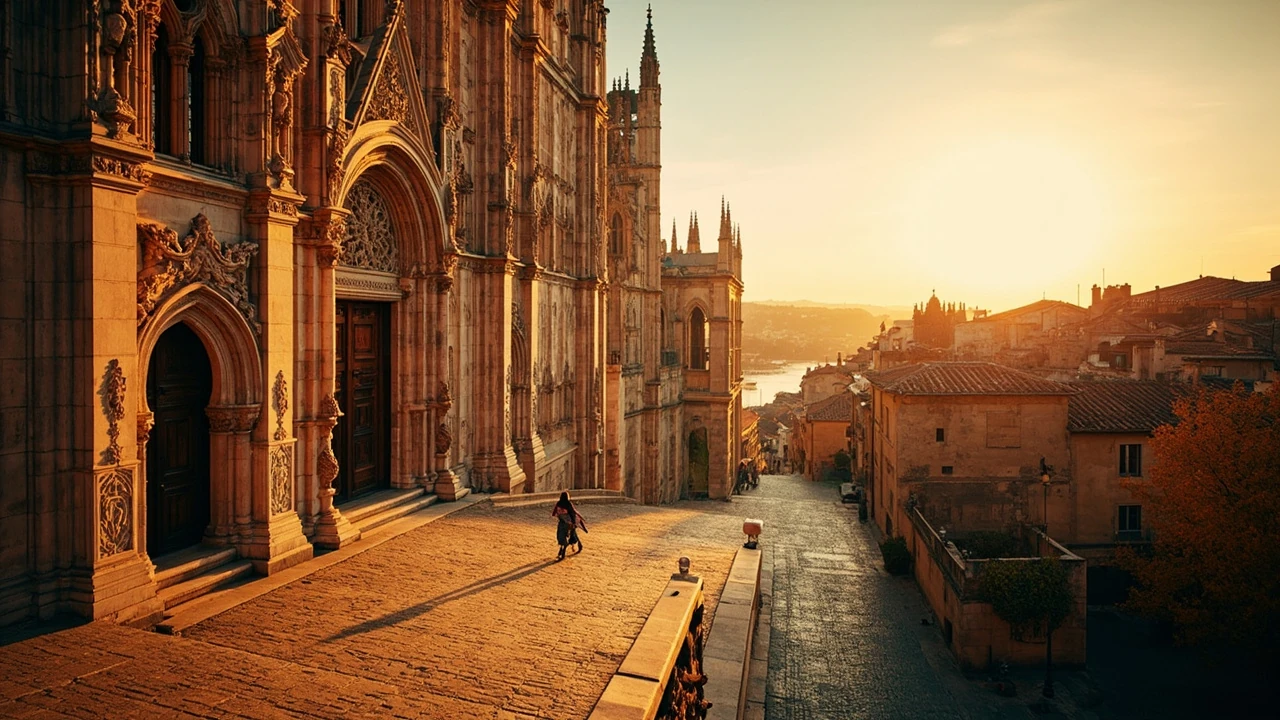
Burgos Cathedral is the city’s defining sight. It took centuries to complete and combines Romanesque, Gothic, and later architectural elements. The exterior deserves a slow look, but the interior is the reason many travelers stay longer than planned. Check current visiting arrangements before arrival because access rules and admission conditions can change. The upper galleries, where available, also provide a useful sense of the building’s scale, although the climb involves stairs.
Other star attractions are more spread out. Las Huelgas Monastery’s origins are associated with Alfonso VIII and Eleanor of England. Its religious architecture and role in the history of Castilian royalty give it a different perspective from the cathedral. The Monastery of San Juan, close to the river, is associated with the Camino de Santiago and contains important artistic elements. Together, these sites illustrate how religious institutions shaped the city’s streets, economy, and culture.
The Arco del Triunfo and the Escalerillas lead toward the river and the upper old town. From Mirador de San Miguel, the view connects the cathedral with the river valley and the city’s rooflines. Paseo del Espolón is a useful place to pause beneath mature trees, while Plaza Mayor provides a straightforward reference point for meeting friends or orienting yourself.
Modern Burgos also deserves attention. Gamonal, the city’s largest district, lies north of the historic center and has its own commercial life and urban character. Its story is more recent than that of the medieval center, but it helps explain contemporary debates about development, public spending, and the shape of the city. For additional context, BBC News coverage of the Calle Vitoria redevelopment dispute explains the background to one controversial plan involving traffic lanes, parking, a bike lane, and green space.
The Museum of Human Evolution, operated by the Atapuerca research team, provides a useful companion to the nearby archaeological site. If you are traveling with children, it can make the area’s long human history easier to understand. For a more focused visit, however, the archaeological complex itself should remain the priority.
| Sight | Why visit | Practical note |
|---|---|---|
| Burgos Cathedral | Architecture, art, scale, and city history in one major complex | Allow at least 90 minutes; confirm current access and gallery arrangements |
| Las Huelgas Monastery’s origins | Royal and religious history with striking medieval architecture | Pair with the cathedral but avoid rushing through both |
| Mirador de San Miguel | Clear overview of the cathedral, old town, and river valley | Best approached on foot; steep streets require comfortable shoes |
| Atapuerca | Major early human evolution site near the city | Allow several hours and account for transfers |
| Gamonal | Contemporary neighborhood and a different view of Burgos | Combine with central streets rather than treating it as a separate day |
Getting around the city and from Madrid
The center of Burgos is compact enough to explore on foot. Most major landmarks are within a manageable walk, although slopes and stone paving can make distances feel longer in warm weather. Wear shoes with good support, particularly if you plan to climb toward San Miguel or visit several religious sites in one day. You can use taxis for short transfers, but walking often reveals lanes and courtyards that are missed by visitors who move only along the main roads.
Local buses connect the center with outer neighborhoods and sites such as Atapuerca. Route numbers, stop locations, and schedules may change, so verify the current journey on the local operator’s official information shortly before travel. For Atapuerca, a combination of local transit and a walk can work, but a taxi, private transfer, or rental car may be more convenient for families, groups, or visitors with limited mobility.
High-speed rail is the most straightforward connection from Madrid. Journey times vary by the selected service and schedule, but the fastest trains generally offer a much easier trip than driving the full distance. Buy tickets in advance when travel dates are firm, especially for Friday travel, holidays, and evening departures. Keep a backup intercity or regional-train plan in mind if your preferred high-speed service sells out.
For drivers, Burgos works as a base for exploring the province, but central parking is not something to take for granted. A hotel with guaranteed parking can reduce friction, particularly when arriving late or traveling with luggage. Avoid leaving valuables visible in the car. On narrow historic streets, watch for pedestrian zones, resident permits, one-way lanes, and vehicles entering or leaving garages.
- Walk between the cathedral, Plaza Mayor, the riverfront, and the old town.
- Use local buses for ordinary neighborhood and outlying-site travel.
- Use a taxi or prearranged transfer when carrying luggage, mobility aids, or young children.
- Reserve rail tickets ahead and confirm the station connection to your hotel.
- Choose a parking-equipped hotel if you plan to keep a rental car for more than one day.
What to eat and how to build a meal plan
Burgos belongs to Castile and León, a region known for hearty food, excellent beef, strong cheeses, legumes, and wine. Cocido maragato is the best-known regional specialty. It is a substantial stew traditionally served in stages with different meats, legumes, potatoes, and vegetables. Portions are generous, and the meal can include multiple small courses. Order it when you have time to sit down rather than treating it like a quick snack between sights.
Other local dishes are easier to sample without committing to a long meal. Potro al vino is slow-cooked horse meat in a rich wine sauce, and some restaurants also offer beef in a similar style. Local bread often arrives with chorizo and a small portion of the stew’s broth. Tapas, small plates, and market stands make it possible to try several flavors, though rules and customs vary by establishment.
The Ribera del Duero wine region surrounds Burgos and has gained international recognition. Many restaurants feature local reds, and a wine list may also include white and rosé options. If you plan to visit a winery, arrange the visit in advance and make transportation a deliberate part of the day. Driving after tasting is not a sensible combination, and rural routes may have limited bus service.
Meals are generally served later than some American travelers expect. A light breakfast may consist of coffee and a pastry, with a substantial lunch around 2 p.m. and dinner after 9 p.m. during busy periods. During hot summer months, an early or late dinner can be more comfortable than the conventional time. If you need a fixed meal time, reserve and explain the schedule when booking.
| Food experience | What to expect | Best time to order |
|---|---|---|
| Cocido maragato | A rich, multi-course stew with meat, legumes, potatoes, and vegetables | Lunch, when you can allow at least 90 minutes |
| Potro al vino | Tender meat served with a dark, wine-based sauce | Lunch or an early dinner |
| Tapas and shared plates | Small savory dishes suited to a flexible food-focused evening | Late afternoon or dinner |
| Ribera del Duero wines | Local red wines alongside regional cooking and winery visits | With lunch or dinner; arrange tastings in advance |
| Market snacks | Useful for quick food while exploring, with quality varying by stall and location | Midday or a light afternoon meal |
How to plan a day in Burgos Spain
A well-paced first day begins with breakfast in the central area and a walk toward the cathedral. Enter the cathedral after the busiest arrival period if your schedule allows, then continue to the Arco del Triunfo and the riverside. A longer lunch provides a natural break before you climb toward the upper viewpoints in the afternoon heat or colder weather.
Late afternoon can bring you back through the cathedral area, the Escalerillas, and Plaza Mayor. Atapuerca deserves a separate half-day or full day, not a rushed stop between two appointments. If you include the archaeological site and museum, arrange the visit in a sequence that prevents fatigue. The Human Evolution Museum can provide orientation before or after the site, depending on current operations and your interest.
For the second day, choose between the monasteries and a neighborhood-oriented walk through Gamonal. A guided visit can add depth to the city’s history, while independent walking works well for travelers who want flexibility. Leave time for a café stop, a shaded square, or a return to a viewpoint before dinner.
Here is a practical three-day structure:
- Day one: Cathedral, Arco del Triunfo, Mirador de San Miguel, riverside walk, Plaza Mayor, and a regional dinner.
- Day two: Atapuerca archaeological complex and the Museum of Human Evolution, with a relaxed evening in the center.
- Day three: Las Huelgas Monastery’s origins, San Juan, optional Gamonal walk, and final shopping or dining.
Adjust the order according to opening days and current schedules. Religious sites and museums may have different hours, and some areas can close earlier than the surrounding streets. A single contact with each official site can prevent the common mistake of building an ambitious itinerary around a day on which a major sight is unavailable.
Excursions beyond the city
Atapuerca is the strongest excursion for most first-time visitors. The archaeological complex contains evidence associated with early human evolution and is recognized internationally for its scientific importance. Allow enough time for the transfer, site routes, and the related museum. Wear supportive footwear because the terrain is uneven, and bring water even if the official route seems manageable on a map.
The Camino de Santiago offers another reason to linger in the province. Burgos lies on the French Way and has long been an important stop for pilgrims. The cathedral’s role on the route, the medieval monasteries, and the continuing presence of walkers give the city a distinct connection with the broader journey. You do not need to walk the full route to appreciate that connection, though even a short section can provide a different perspective on the landscape.
For travelers with more time, rural routes through Castile and León lead to small towns, Roman remains, wine country, and open landscapes. These trips work best with a driver or organized excursion. Public transportation can cover certain destinations, but service is generally less flexible outside the city. Do not assume that every rural attraction is easy to combine with another in the same half-day.
Nearby European itineraries can also be broadened if you are staying longer. Spain is the destination here, so comparisons with other countries should remain brief, but travelers may compare the pace of Burgos Spain with slower countryside routes or larger historic cities. The site’s broader travel coverage includes ideas for Greek history beyond Athens and the varied character of the Balearic Islands. Each offers a useful contrast to a city-centered Castilian trip.
| Excursion | Best for | Suggested time | Main consideration |
|---|---|---|---|
| Atapuerca | Archaeology and early human evolution | Half-day to full day | Plan transportation and wear supportive shoes |
| Camino de Santiago section | Walking, landscape, and pilgrimage history | 2–5 hours | Choose the route and distance to match your fitness |
| Ribera del Duero winery | Local wine and a rural counterpoint | Half-day | Book ahead and plan a sober driver |
| Small-town Castile route | Architecture and a slower rural pace | Full day | Driving is usually more flexible than public transit |
Essential details for a smooth visit
Language is the most visible adjustment for some American travelers. Spanish is the primary language, and English is more likely to be understood in hotels, restaurants, museums, and tourist information than in smaller shops or local neighborhoods. A few useful Spanish phrases make a visit smoother: hola for hello, gracias for thank you, la cuenta, por favor for the bill, and ¿Dónde está…? for asking where something is.
Cards are widely accepted in many established restaurants, hotels, and tourist attractions, but carrying some cash is useful for small establishments, markets, or places with unreliable terminals. Check the payment method before ordering an expensive meal. Tipping is not a large fixed part of the bill in the same way it can be in the United States. A small amount for good service is appreciated, but it is not normally announced with a large mandatory percentage.
Compact cameras and phones are generally sufficient for the old town. A modest tripod can help with evening architectural shots, though crowded walkways and pedestrian rules matter more than carrying heavy gear. If you hike beyond the center, check weather conditions and local trail guidance. The most useful items are supportive shoes, a light layer for cool evenings, and a refillable water bottle.
Safety is not defined by avoiding the entire old town. Instead, use ordinary city awareness. Keep your phone away from café tables near busy streets, secure valuables in crowded transport, and avoid isolated rural routes after dark. The riverfront, main squares, and commercial streets are generally active places, but the quiet streets outside the center deserve the same attention you would give in any unfamiliar city.
Before leaving home, confirm the following:
- Passport validity and any entry requirements that apply to your nationality.
- Current cathedral, monastery, museum, and archaeological-site opening arrangements.
- Rail tickets or a practical backup plan for travel from Madrid.
- Hotel location, parking availability, and the best arrival point from the station.
- Weather and trail conditions for any rural excursion.
- A mobile data plan or other practical way to navigate and translate.
Frequently asked questions
Is Burgos Spain worth visiting for a short trip?
Yes. A visit of two or three nights is enough for the cathedral, the historic center, the monasteries, several meals, and Atapuerca. One day can cover the old town, but it feels rushed if you also want a regional lunch and a relaxed walk along the river.
How many days should I spend in Burgos?
Two nights suit a focused first visit, while three nights provide a better balance between city sights and nearby attractions. Four or more days make sense if you want to explore Atapuerca, a Camino de Santiago section, wine country, or rural Castile without rushing between them.
What are the best things to do in Burgos Spain?
The highest priorities are Burgos Cathedral, the upper-town viewpoints, the Arlanzón riverfront, Plaza Mayor, Las Huelgas Monastery’s origins, and a meal featuring cocido maragato. Add Atapuerca for archaeology and the Human Evolution Museum for broader context.
Do I need a car to visit Burgos?
No for the historic center, which is compact and largely walkable. A car or transfer is useful for Atapuerca and rural destinations, but it adds parking and driving responsibilities. Visitors relying on high-speed rail can use local buses, taxis, or a prearranged transfer for excursions.
How far is Atapuerca from Burgos?
Atapuerca is close enough for a substantial half-day or full-day visit. Travel time varies with the route and mode of transport, so check current options rather than relying on a fixed number. Wear supportive shoes because the archaeological area includes uneven paths.
What is the best time of year to visit Burgos?
Spring and early autumn generally offer the most comfortable conditions for walking and sightseeing. Summer is pleasant in the evening but can be hot at midday. Winter is quiet and atmospheric, though rural access and trail conditions may require more checking.
Can English-speaking visitors easily find food and services in Burgos?
Many hotels, restaurants, museums, and visitor-facing businesses can assist in English, but Spanish remains the primary language. Learning a few basic expressions is helpful, especially in small shops, local neighborhoods, and rural areas. Cards are widely accepted, although carrying a modest amount of cash remains sensible.
Is Burgos family-friendly?
Burgos Spain is generally manageable with children because the central sights are close together and Atapuerca can engage younger visitors with the museum and archaeological setting. Plan rest breaks, bring water, and use a taxi or private transfer for the outlying site if walking becomes tiring.
Leave a Reply