
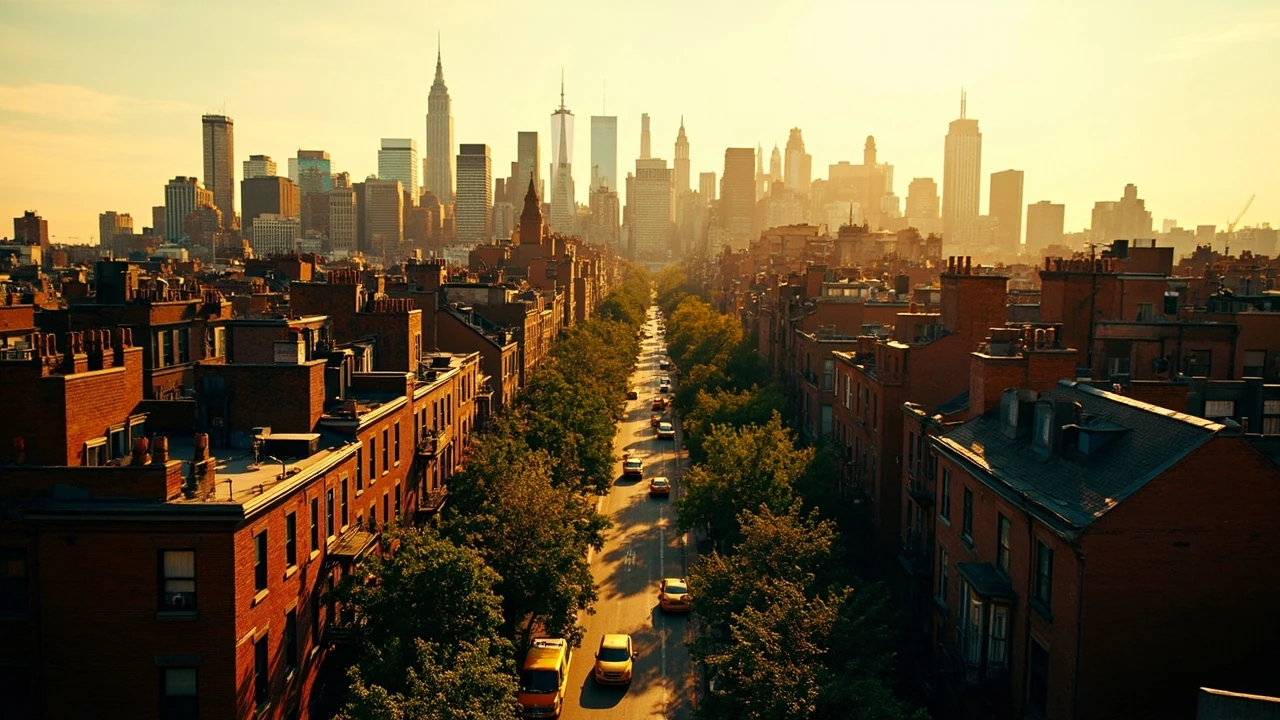
parts of manhattan: choose the neighborhood that fits your trip
A first-time visitor can spend an entire day in Manhattan and still feel that the city has been missed. That usually happens when a traveler treats the island as one giant attraction zone instead of choosing a few neighborhoods that match the experience they want. Midtown may be ideal for landmarks and Broadway, while Greenwich Village offers street life, smaller parks, and a more intimate feel. Harlem, the Upper West Side, and the Financial District each tell a different story and serve different practical needs.
The best way to understand the parts of Manhattan is to separate the island by neighborhood, transit connections, crowd patterns, and the kinds of activities available. This guide does not attempt to rank every attraction or create a rigid itinerary. Instead, it helps you decide where to base yourself, what to see nearby, and how to move between neighborhoods without spending most of the day in transit.
For general arrival information, including transportation and visitor resources, consult the official New York City travel tips, which provides useful background for this point. Conditions can change, so check official transit and attraction pages close to the visit rather than relying on an old itinerary.
How to choose among the parts of Manhattan
Start with the part of the day you care about most. Morning is often best for neighborhood streets, museums, and quieter residential blocks. Midday suits major attractions, shopping, and performances. Evening becomes more appealing around restaurants, music venues, bars, and illuminated streets. The neighborhood that feels empty at 9 a.m. may feel lively after dark, and a famous sight often creates its biggest crowd in the middle of the afternoon.
Next, consider how much movement you want. Lower Manhattan concentrates many major sights within walking distance of one another, but the distances sound shorter than they are. The Upper West and Upper East Sides are more spread out. A visitor who prefers one base for the entire trip may do well near a major subway station. A visitor who wants to experience changing architecture and street scenes benefits more from a hotel in a quieter area and a plan that includes subway rides.
- For a first visit: Prioritize Lower Manhattan, the West Village, Midtown, and one major stop in Upper Manhattan or Harlem.
- For a short trip: Group attractions by neighborhood rather than crossing town for every photo opportunity.
- For families: Consider easy subway access, park space, practical food options, and shorter walking distances.
- For nightlife: Stay near the area you expect to use after dinner, because late-night trains can take longer than daytime service suggests.
- For a quiet stay: Look beyond the busiest tourist streets, especially on the Upper West Side, Upper East Side, and parts of Harlem.
- For limited mobility: Verify elevator access and current station conditions, then choose destinations where the main attractions can be reached with minimal stairs.
Cost is another factor, but it varies by street, time, and establishment rather than fitting neatly into one Manhattan price. A restaurant near a theater district may be convenient but expensive during pre-show hours. A cafe in a residential area can be more relaxed. Broadway has budget productions and premium seats within the same show, just as Manhattan contains both major museums and small galleries. The right neighborhood simply makes comparison easier.
Visitors sometimes assume that the most recognizable skyline represents the whole destination. That mistake is common in other major cities too, as explained in South Korea landmarks beyond Neon Seoul. Manhattan is similar in this respect: the headline view is only one layer of the place. The useful choice is not between “Manhattan” and “not Manhattan,” but between neighborhoods with distinct streets, histories, crowds, and routines.
Downtown Manhattan: history, harbor views, and dense sightseeing
Downtown covers several distinct areas rather than one uniform district. Financial District buildings rise around narrow old streets, while nearby Battery Park, the waterfront, and the approaches to several ferries create an open contrast. The area works well for visitors interested in early American history, architecture, the harbor, and landmarks such as the area around Wall Street.
Financial District is busiest on weekdays. Weekend visits often feel more relaxed because the volume of office workers drops, although many restaurants and shops keep their own schedules. The neighborhood is compact, yet a large number of skyscrapers can make distances feel deceptive. Allow extra time for security checks, elevators, and walking around building entrances.
For a less businesslike downtown experience, continue toward the water. Battery Park provides a transition between the financial precinct and the harbor. From there, visitors can take a ferry for views of the skyline and the Statue of Liberty, or continue along the waterfront to Battery Park City. Cobblestones, plazas, and open-air areas make this part of downtown more breathable than the office core.
| Downtown area | Best for | Typical visit style | Planning note |
|---|---|---|---|
| Financial District | Architecture, business history, Wall Street | Walking tour with a museum or waterfront stop | Weekends are usually calmer, but check business-district access rules |
| Battery Park and the waterfront | Harbor views, ferries, outdoor time | Half-day visit linked to the Battery | Allow extra time for ferry procedures and waterfront security |
| Battery Park City | Waterfront parks, residential architecture | Leisurely walk toward the harbor | Useful when the visitor wants a break from dense streets |
| Chinatown and nearby edges | Food, neighborhood character, energetic streets | Self-guided exploration with specific destinations | Expect busy pedestrian passages and variable navigation |
Downtown is an efficient first stop, but treating it as a complete answer to the parts of Manhattan question misses the borough’s residential and cultural variety. A useful combination is a morning downtown followed by a subway ride north rather than a second night in the same hotel district.
SoHo, Greenwich Village, and the West Village
SoHo, Greenwich Village, and the West Village overlap in visitor maps while offering different experiences. SoHo is known for cast-iron architecture, broad streets, galleries, restaurants, and retail. Its blocks can be elegant or intensely commercial depending on the corner. Greenwich Village has a looser, more irregular street plan and a strong mix of old buildings, restaurants, theaters, music, and independent shops. The West Village extends toward the Hudson River and includes some of Manhattan’s most recognizable residential streets.
These neighborhoods work especially well for travelers who prefer walking and street-level experiences to a tightly packed museum schedule. The Freedom Trail passes through parts of this area, but the most rewarding approach is to pair one or two historical stops with unplanned time in the surrounding blocks. A short stop at a landmark followed by a meal or an afternoon in Washington Square Park can be more memorable than checking off every nearby sight.
Washington Square Park acts as a useful orientation point, but its surroundings change character as visitors move north and west. One block can face a major historic site, while another contains small businesses, performance spaces, or residential entrances. These quick shifts are part of the appeal. They also mean that a detailed street-by-street expectation can be wrong.
- Morning: Walk through the West Village before the busiest daytime crowds arrive.
- Midday: Combine a historic site with lunch rather than trying to cover several houses of significance.
- Afternoon: Use a museum, performance, or longer indoor break during the hottest or busiest hours.
- Evening: Explore the Village edges or return for dinner and a performance near a subway stop.
Visitors who dislike hills should check the route carefully. The terrain rises noticeably in the West Village, while streets farther south and west can feel flatter. Comfortable shoes matter, but a walker can turn the slopes into an advantage because the routes avoid the most crowded avenues.
These areas also work well with a hotel near a subway line rather than a hotel beside every desired destination. A well-placed station can make the broader set of Manhattan neighborhoods easier to reach while preserving a calmer nighttime environment.
Midtown Manhattan: landmarks, theaters, and convenient central access
Midtown is the part of Manhattan most closely associated with a checklist of famous sights. Around the southern portion of the district are major commercial buildings, the Empire State Building, Madison Square Garden, and areas associated with the Flatiron District. Farther north, Grand Central Terminal, the Chrysler Building, the New York Public Library, and Rockefeller Center create another cluster. Between those areas are Bryant Park, the garment district, Koreatown, and pockets of older residential streets.
Midtown is convenient because so much is close together, but it is also one of the hardest areas for a visitor to experience quietly. Large numbers of commuters, tourists, office workers, and eventgoers share the sidewalks. If the aim is to see several major attractions in one day, this concentration is valuable. If the aim is neighborhood atmosphere, time spent on a broad avenue can feel more like city movement than local exploration.
| Midtown destination | What it offers | Best time to plan | Main trade-off |
|---|---|---|---|
| Empire State Building area | Observation deck, Art Deco architecture | Early morning for the shortest visit; late afternoon for skyline light | Midday queues can be substantial |
| Bryant Park and the library | Green space, reading rooms, architecture, nearby events | Morning or a weekday lunch period | Surrounding streets are busy even when the park feels calmer |
| Rockefeller Center area | Landmarks, performance history, seasonal public spaces | Early daytime or during evening events | Commercial activity continues well into the evening |
| Times Square | Theatres, restaurants, illuminated signs, street performances | Late afternoon into evening | Crowds, traffic, and commercial intensity dominate the experience |
| Flatiron and Madison Square Park | Architecture, park, neighborhood cafés, nearby shopping | Late morning on a mild day | Nearby streets become highly congested |
Broadway theaters add another layer to Midtown, but a theater district is not identical to a Broadway district. Some venues sit in or near Times Square, while others are farther away around the Theater District, Lincoln Center, and nearby blocks. A ticket confirms the exact venue and performance time; the neighborhood should be planned around that address rather than around the idea of Broadway in general.
Midtown is often the most convenient base for a brief, attraction-heavy visit. It connects to many subway lines and makes it easy to reach both downtown and northern neighborhoods. The trade-off is less residential calm. Visitors seeking that balance may stay just outside the busiest core, near a side street with good transit access.
Harlem, East Harlem, and Upper Manhattan
Upper For additional context, Manhattan offers some of the city’s clearest neighborhood identities. Harlem is associated with a long cultural history, landmarked architecture, churches, institutions, music, food, and significant changes along its commercial corridors. East Harlem has its own residential character and strong food traditions. Washington Heights and Inwood, still farther north, bring additional linguistic, cultural, and architectural influences.
This region rewards a slower pace. The famous Apollo Theater and the area around it are not the entirety of Harlem, and the best visit may include a museum, historic street, food stop, and a performance. Similarly, visiting only one address in East Harlem gives a narrow impression of a larger and diverse area.
Columbia University occupies an important part of the northern landscape around Morningside Heights and is worth considering even without academic intent. The surrounding neighborhoods offer parks, architecture, museums, and views across the Hudson. Inwood offers a quieter atmosphere near the northern end of the island, while Fort Tryon Park and the surrounding trails provide a different kind of outdoor experience from the heavily visited southern parks.
- Choose a focused route: Select one or two interests, such as music history, landmark architecture, or food, rather than covering every northern neighborhood.
- Use the one-way bus network: North-south avenues can be useful, but buses move through traffic and may take longer than the map suggests.
- Check event schedules: Concerts and cultural events can enrich a visit, but they also increase demand for nearby restaurant tables and trains.
- Build in street breaks: The area rewards exploration, but a short café stop or park pause prevents the day from becoming a sequence of long walks.
Harlem and Upper Manhattan are not interchangeable. A visitor who wants major historic landmarks may focus on central Harlem, while someone interested in housing architecture and neighborhood transitions might prefer a longer route toward Hamilton Heights or Washington Heights. This is why guides should use neighborhood names and specific destinations rather than treating Upper Manhattan as one interchangeable attraction.
Upper West Side, Upper East Side, and Central Park
The Upper West Side and Upper East Side sit on opposite sides of Central Park and offer a useful contrast in rhythm and landmarks. The west side has a strong association with brownstones, tree-lined residential streets, the Museum of Natural History, Lincoln Center, and the Hudson River. The east side includes the Metropolitan Museum of Art, Museum of the City of New York, Carnegie Hall, and the area around the park’s southeast entrance.
Central Park divides the two sides geographically, but it also connects the practical experience of visiting them. On the west, broad pedestrian paths lead toward the Natural History Museum and the Jacqueline Kennedy Onassis Reservoir. On the east, the park rises toward the Met and the higher overlooks. A full crossing takes longer than many visitors expect because the park contains an entire landscape rather than a shortcut.
| Feature | Upper West Side | Upper East Side |
|---|---|---|
| Best-known cultural stop | American Museum of Natural History | Metropolitan Museum of Art |
| Major performance setting | Lincoln Center | Carnegie Hall and nearby music venues |
| Best nearby green-space options | Central Park west side, Riverside Park, the Hudson waterfront | Central Park east side, smaller neighborhood plazas |
| Typical visit style | Museum day, Lincoln Center, residential walk, riverside time | Met day, park crossing, gallery or music-focused itinerary |
| Main planning consideration | Avoid treating the museum and park as adjacent; budget the full block-by-block walk | Give the Met and surrounding museums more time than a quick photo stop allows |
The Upper West Side often suits visitors who want parks, cultural institutions, and residential streets within a relatively compact area. The Upper East Side works well for museum-centered itineraries and music. Both require attention to the position of the hotel: a map address near a subway station can be more valuable than being a short walk from one particular museum.
Central Park also changes according to the entrance and route. Entering near a busy cultural complex creates a very different first impression from arriving through a residential edge near the reservoir or a less trafficked crosstown street. Travelers with limited time should decide what they want from the park before choosing a path.
When Manhattan ends: Brooklyn, Queens, and the Hudson side
Strictly speaking, Brooklyn, Queens, the Bronx, and New Jersey are not parts of Manhattan. Visitors still cross those boundaries because the best experience of New York often extends beyond the island. Brooklyn offers distinct waterfront and neighborhood experiences, while Queens contains parks, food districts, airports, and residential communities with their own identities. The Bronx is the only New York borough on the mainland.
A practical distinction helps planning. Brooklyn Heights and the Brooklyn Bridge Park waterfront are convenient extensions for architecture, harbor views, and evening dining. Long Island City provides skyline views and direct subway access from Manhattan. Astoria has a different atmosphere and rewards a longer excursion. The Bronx can suit travelers focused on the Bronx Zoo, the New York Botanical Garden, Yankee Stadium, or particular cultural institutions.
Crossing a bridge is only part of the trip. Visitors should select a small number of destinations in the destination borough and group them geographically. Planning a “day in Brooklyn” around several widely separated locations can consume much of the day in transit.
- Choose one borough rather than adding several distant stops to a Manhattan itinerary.
- Select a subway, bus, train, or ferry route that suits the departure neighborhood and final destination.
- Account for return travel, especially when bridges, tunnels, or late-evening schedules are involved.
- Reserve timed admission or event tickets before the day begins when required.
- Keep a fallback activity near the final destination if weather or a delayed train changes the schedule.
Not every day trip needs to leave Manhattan. The island contains enough varied streets, museums, parks, and cultural spaces to fill a week. But a carefully selected excursion can add a waterfront or neighborhood experience that the island itself cannot provide. The same rule of looking beyond a single headline destination appears in guides to Panama attractions beyond the canal: one famous focal point should define the trip, not every hour of it.
Manhattan’s own cultural layers also extend beyond the newest attractions. Its architecture, working neighborhoods, religious institutions, and community spaces make it worthwhile to leave several unstructured hours in the plan. That time can reveal more about how the city lives than a rapid route between landmark buildings.
A practical way to build a Manhattan itinerary
Start with two anchor neighborhoods rather than a long list of scattered targets. One anchor can handle the visitor’s major sightseeing priorities, while the second provides a different atmosphere. For example, a classic combination might pair Lower Manhattan with the West Village, or Midtown with Harlem. A first-time visitor with only one full day should resist the temptation to cross the island several times.
Use the subway for longer moves and reserve walking for areas where the street experience is part of the visit. Manhattan’s blocks can seem short on a map because they are numbered in a grid, but avenues, stops, crowds, and station exits add time. The journey between neighborhoods should be treated as part of the day’s pacing rather than as nonexistent empty space.
A productive one-day structure looks like this:
- Early morning: Visit a neighborhood that becomes crowded later, such as the Financial District, Upper West Side, or a quieter section of Harlem.
- Late morning: Take one major attraction or museum and allow enough time to explore its immediate surroundings.
- Lunch: Eat within the current neighborhood instead of crossing town for a marginally different meal.
- Afternoon: Continue with a park, performance, shopping area, or indoor cultural stop nearby.
- Evening: Choose the neighborhood based on the evening experience: theater in Midtown, restaurants in the Village, a performance in Harlem, or a waterfront walk downtown.
Leave one flexible block unplanned. It can absorb a delayed train, a ticket that is not yet available, a neighborhood that looks better than expected, or a change in weather. Strict schedules look efficient on paper but often force visitors to rush through the parts of Manhattan they came to understand.
Transportation details deserve attention before arrival. The official city guidance is the best starting point for current visitor information, while the transit system should be checked for temporary changes and service interruptions. Walking remains the fastest way to cover short distances, but late-evening subway travel may involve waiting. When several travelers are separated or carrying bulky items, a taxi or rideshare can make the final transfer easier, though traffic may slow the trip.
Frequently asked questions
Which part of Manhattan is best for a first visit?
Most first-time visitors get a good introduction by combining Lower Manhattan and the West Village with one central Midtown experience. Lower Manhattan provides major historical landmarks, the Financial District, and harbor views. The West Village introduces narrower streets, parks, dining, and neighborhood atmosphere. Midtown adds major observation decks, Broadway, and convenient transport connections. Visitors with only one day should choose two areas rather than trying to cover the entire island.
What is the most interesting part of Manhattan for neighborhoods and street scenes?
The West Village, Greenwich Village, Harlem, and the Upper West Side all reward slower walking. The West Village is known for irregular streets, historic blocks, shops, and restaurants. Harlem combines landmarked architecture with important cultural institutions and a lively commercial life. The Upper West Side offers brownstone streets near Central Park, museums, performance venues, and the Hudson waterfront. The best choice depends on whether the visitor prioritizes food, music, history, shopping, or quiet residential scenery.
Is Times Square the best place to stay in Manhattan?
Times Square is excellent for immediate access to theaters, restaurants, and public transportation, but it is rarely the calmest place to sleep. Visitors who value a quieter room may find better options on a side street near a major station or in a residential neighborhood such as the Upper East Side, Upper West Side, or parts of Harlem. The decision should reflect the visitor’s nightly priorities rather than only daytime convenience.
How many neighborhoods should I visit in Manhattan?
Two well-chosen neighborhoods are enough for one day. Three can work for a full two-day visit if locations within each neighborhood are grouped geographically. Trying to add many more often creates a schedule dominated by trains and walks between destinations. Choose the areas that offer the experiences you actually want, then leave room for unplanned exploration.
Which part of Manhattan is best for families with children?
There is no single best area because age, interests, and museum time matter. The Upper West Side is convenient for the American Museum of Natural History and Central Park, while Midtown offers theaters and major attractions. Lower Manhattan suits visitors interested in history, ferries, and the waterfront. Check each child’s interests, compare travel time between the hotel and planned activities, and avoid a route that requires repeated cross-town transfers.
Is it easy to get between the parts of Manhattan?
Most major neighborhoods are connected by the subway, and the system can be efficient, but it is not always the fastest choice for a short crosstown trip. Walking may be quicker between adjacent areas, while bridges, tunnels, and late-night service can complicate trips beyond the island. Use a transit map for orientation, but add time for walking through stations and waiting on the platform.
Where should visitors go for Manhattan nightlife?
Manhattan nightlife is concentrated in several different districts, each with a different character. The West Village and Greenwich Village offer bars, restaurants, music, and smaller venues. Midtown supports theater-centered evenings and late dining. Lower Manhattan can be lively around certain hospitality districts, while Harlem offers music and neighborhood nightlife. Choose one area for the evening rather than planning to sample several widely separated scenes.
Do parts of Manhattan outside the main landmarks feel touristy?
Main landmarks attract the largest crowds, but neighborhood streets can feel quite local. The challenge is recognizing where the interesting boundaries are. Even areas known for tourism include residential blocks, community businesses, and quiet corners. Walking beyond the obvious photo locations can reveal a different character, but it is still helpful to choose a defined route and keep track of the time.
Can I see New York City’s famous skyline from these neighborhoods?
Yes, but the skyline looks different from each location. Lower Manhattan and waterfront areas provide dramatic views toward the tallest towers. Central Park provides framed skyline moments between its paths and buildings. The Upper East and Upper West Sides offer more distant perspectives across the park. Hudson River locations reveal the island’s vertical profile. For a broad first impression, a downtown harbor walk and an elevated or waterfront view can show more than a street-level visit alone.
What should I do with one extra hour in Manhattan?
Stay where you are and walk one or two blocks beyond the busiest avenue. Look for a smaller gallery, a neighborhood cafe, a shaded park corner, a historic building, or a street with a strong architectural identity. An extra hour used in this way often produces a clearer sense of the city than adding another distant landmark and rushing toward it.



Leave a Reply