
Ask someone in the United States what comes to mind when they hear “Panama,” and the answer is usually pretty predictable.
The Panama Canal.
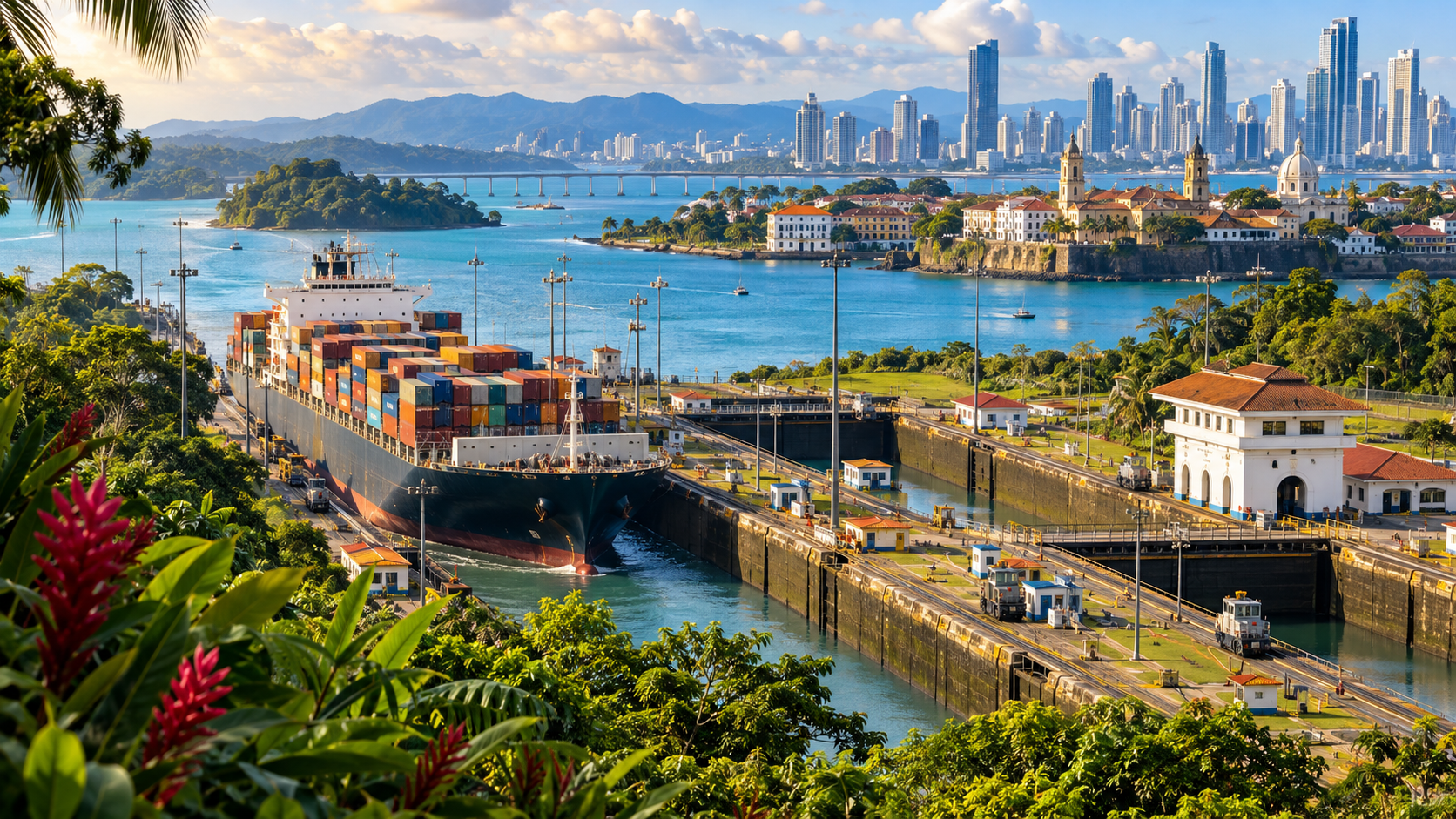
Fair enough. It is one of the world’s great engineering projects, and watching an enormous ship squeeze through a lock system is far more interesting than it sounds on paper.
But Panama gets weirdly underestimated beyond that.
This narrow Central American country has Caribbean islands, Pacific beaches, cloud forests, volcanoes, coral reefs, old Spanish forts, modern skyscrapers and indigenous territories – sometimes only a few hours apart.
You can drink coffee in cool mountain air in the morning and eat seafood beside warm tropical water later in the trip.
Panama City itself is a strange and fascinating mix. Glass towers rise behind neighborhoods filled with colonial balconies and church plazas. Tropical forest begins surprisingly close to downtown. Massive ships wait offshore while commuters sit in city traffic.
It should not all fit together.
Somehow it does.
Where Should First-Time Visitors Go in Panama?
If this is your first trip, do not try to see the entire country in six days.
Panama looks small on a map, but geography slows things down. Islands require boats or flights. Mountain roads take time. Some of the best nature sits far from major highways.
A balanced first trip usually combines Panama City with one or two additional regions.
| Destination | Known For | Best For |
|---|---|---|
| Panama City | Canal, historic district, skyline | First-time visitors |
| Guna Yala | Caribbean islands and Guna culture | Beaches and island trips |
| Bocas del Toro | Islands, snorkeling, surf | Relaxed Caribbean travel |
| Boquete | Coffee, mountains, hiking | Cool weather and nature |
| Coiba | Marine life and diving | Divers and wildlife lovers |
| El Valle de Antón | Volcanic valley, hiking | Easy nature escape |
| Santa Catalina | Surfing and Coiba access | Beach travelers |
The Panama Canal Is Famous for a Reason
Yes, start with the obvious one.
The Panama Canal connects the Atlantic and Pacific oceans through a system of locks, channels and artificial lakes.
Instead of ships sailing all the way around South America, vessels can cross the Isthmus of Panama.
The journey changed global shipping.
And watching it happen is strangely addictive.
At the locks, ships that seemed gigantic from a distance move slowly into narrow chambers. Water levels change. Gates open. Tugboats and locomotives help operations along.
It is engineering performed at the speed of suspense.
You know the ship is going to make it.
You still watch.
Miraflores Is the Classic Canal Visit
The Miraflores Locks area is the most familiar option for visitors staying in Panama City.
The visitor experience explains how the canal works and offers views of ships moving through the locks when vessel schedules cooperate.
The biggest mistake is thinking a canal visit takes ten minutes.
Give it time.
Ships do not appear on command because you bought a ticket.
Commercial shipping has its own schedule.
Casco Viejo Is the Panama City Everyone Photographs
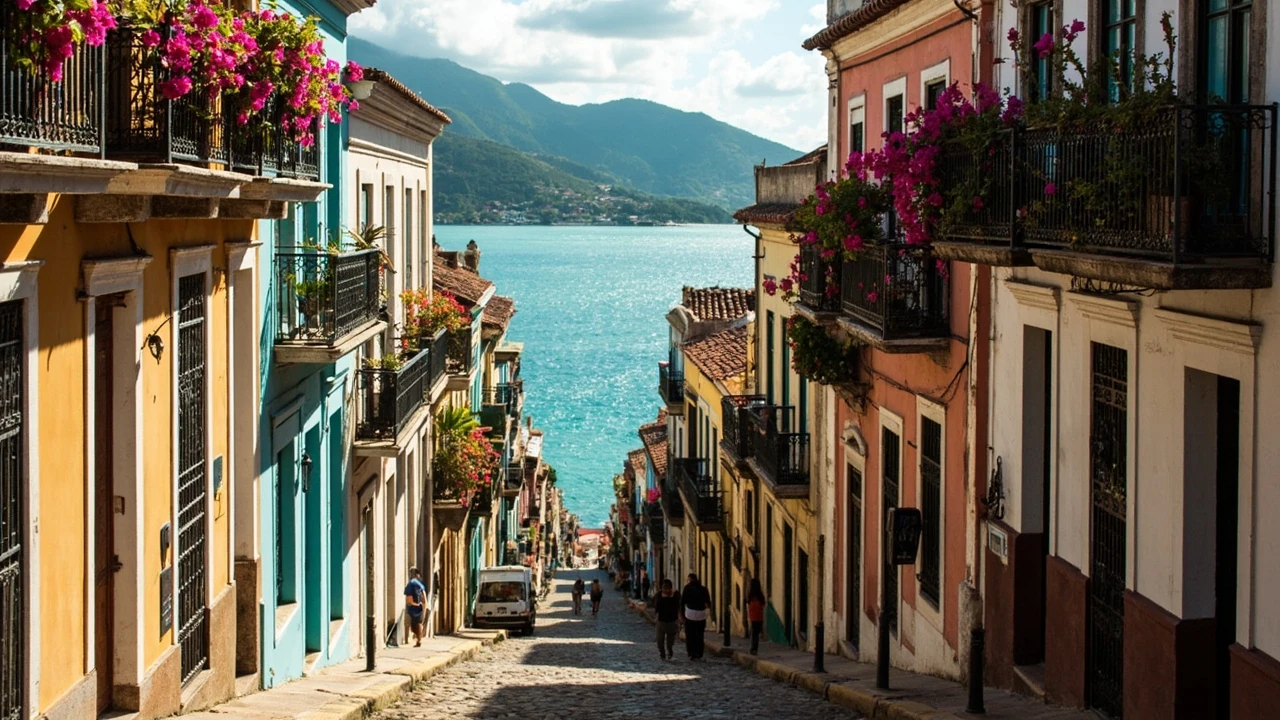
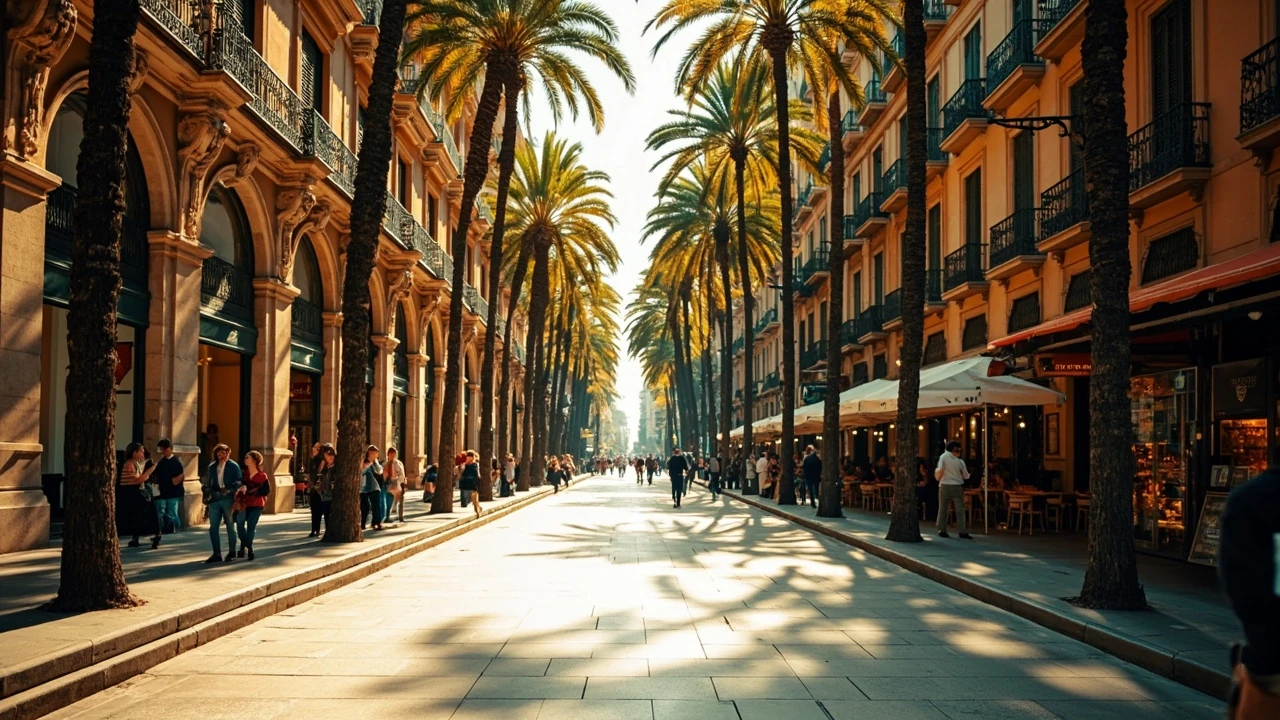
Panama City’s historic district, often called Casco Viejo or Casco Antiguo, feels almost disconnected from the modern skyline nearby.
Stone churches, narrow streets, restored colonial buildings and shaded plazas replace glass towers.
Some buildings are beautifully renovated.
Others still show worn walls and layers of age.
That contrast keeps the neighborhood from feeling too polished.
Walk without a strict route.
Plaza de Francia, waterfront viewpoints, churches and small cafés are easy to connect on foot.
Then look across the water.
The modern towers of Panama City rise in the distance, giving you one of the country’s strangest architectural contrasts.
Panamá Viejo Is a Different Historic Site
This confuses first-time visitors constantly.
Casco Viejo and Panamá Viejo are not the same thing.
Panamá Viejo contains the archaeological remains of the earlier Spanish colonial settlement founded in 1519.
The city was attacked and destroyed in the 17th century, after which the settlement was relocated to the area now known as Casco Viejo.
Today you can walk among stone ruins and climb the old cathedral tower for views over the surrounding city.
Modern apartment buildings visible beyond centuries-old ruins make the setting especially interesting.
Panama’s Colonial Route Goes Beyond the Capital
Panama’s importance during the Spanish colonial period came largely from geography.
Goods crossed the narrow isthmus between the Pacific and Caribbean sides before continuing across the Atlantic.
Historic routes, settlements and fortifications grew around that movement.
The Caribbean fortifications around Portobelo and San Lorenzo preserve part of this history.
They are particularly interesting if you like places where scenery and history occupy the same frame.
Old defensive walls look out toward bright tropical water.
It feels peaceful now.
It was built because the area absolutely was not peaceful then.
Portobelo Has More History Than Its Size Suggests
Portobelo sits on Panama’s Caribbean coast.
During the Spanish colonial era, it became an important port in the movement of goods and treasure.
Fortifications protected the harbor from attack.
Today, ruined defensive structures sit around the bay.
The town is also known for the Iglesia de San Felipe and its famous Black Christ, an important focus of religious devotion.
Portobelo works well for travelers interested in Afro-Panamanian culture, colonial history and the Caribbean coast rather than resort beaches alone.
Guna Yala Has the Islands People Think Require a Flight to the Maldives
Off Panama’s Caribbean coast lies an extraordinary chain of small islands associated with the Guna people.
You may still hear the area called the San Blas Islands, although Guna Yala is the indigenous territory’s name.
The classic image is almost ridiculous in its perfection.
A tiny patch of white sand.
A handful of palm trees.
Clear turquoise water.
Maybe a wooden boat offshore.
That’s basically it.
Some islands are inhabited. Others are little more than sand and vegetation.
Accommodations tend to be simpler than high-end Caribbean resorts.
That is part of the character.
Guna Yala Is Not Just a Beach Product
This matters.
The islands are part of an autonomous indigenous territory where the Guna maintain strong cultural and political traditions.
Visitors may encounter traditional clothing, locally made molas and community-run tourism.
Do not treat villages as open-air museums.
Ask before photographing people closely.
Local rules, entrance fees and travel arrangements can differ from standard tourism elsewhere in Panama.
You are visiting someone’s home, not a resort built exclusively for outsiders.
Bocas del Toro Has a Different Caribbean Personality
Bocas del Toro, near the Costa Rican border, offers another version of Panama’s Caribbean coast.
The region includes a collection of islands, waterways, mangroves and beaches.
Bocas Town on Isla Colón is the main travel hub.
It has hostels, cafés, restaurants, bars and water taxis moving constantly between islands.
Outside town, things change quickly.
One boat ride can take you from busy docks to mangroves, snorkeling spots or quiet beaches.
The pace is loose.
Plans tend to become suggestions.
What Do You Actually Do in Bocas?
- Take water taxis between islands.
- Snorkel around reefs and clear-water areas.
- Visit beaches around Isla Colón and neighboring islands.
- Look for sloths, monkeys and tropical birds on nature trips.
- Surf during suitable seasonal conditions.
- Spend at least one afternoon doing absolutely nothing useful.
That last activity is surprisingly popular.
Starfish Beach Is Pretty, but Give the Wildlife Space
Several Panama beach destinations are associated with visible marine animals, including starfish.
If you encounter them, look.
Do not pick them up for pictures.
Wild animals generally have a better day when tourists admire them without rearranging them.
A revolutionary concept, apparently.
Boquete Is Panama’s Escape From the Heat
Panama is tropical.
Then you reach Boquete and suddenly people are wearing light jackets.
The mountain town lies in Chiriquí Province at higher elevation near Volcán Barú.
Temperatures are cooler than in Panama City or coastal areas, and the surrounding hills are intensely green.
Coffee farms spread across the slopes.
Cloud forest covers nearby mountains.
Hummingbirds show up in gardens.
For travelers who have spent a week sweating through beaches and cities, Boquete can feel like someone turned on air conditioning for an entire landscape.
Panama Produces Some Seriously Famous Coffee
The highlands around Boquete and Volcán are internationally known for specialty coffee.
Geisha coffee, in particular, has become famous among coffee enthusiasts and can command extremely high prices at specialty auctions.
Coffee tours usually explain harvesting, processing, roasting and tasting.
Even if you normally drink whatever comes out of the office machine, tasting coffee where it is grown can change the experience.
You start noticing acidity, fruit, floral notes and processing methods.
Then you become annoying about coffee.
There are risks to every trip.
Volcán Barú Gives You Panama’s Highest Viewpoint
Volcán Barú is Panama’s highest mountain.
The dormant volcano rises above the Chiriquí highlands and attracts hikers interested in reaching the summit.
Under exceptionally clear conditions, it is possible to see toward both the Caribbean and Pacific sides from high elevations.
Do not plan around that view as a guarantee.
Clouds are clouds.
They do not care how early you woke up.
The hike can be demanding, particularly because many visitors attempt it overnight to reach the summit around sunrise.
Prepare properly rather than treating it like a casual city walk with a slightly steeper ending.
El Valle de Antón Sits Inside an Ancient Volcanic Landscape
El Valle de Antón, often shortened to El Valle, is one of Panama’s easiest mountain escapes from the capital region.
The town sits within a broad volcanic caldera surrounded by green ridges.
It is popular for hiking, waterfalls, markets and cooler air.
Trails lead into surrounding hills, including routes known for panoramic views.
El Valle is particularly useful if you want nature without committing to a flight or a long journey across the country.
A couple of nights works nicely.
Coiba Is One of Panama’s Greatest Natural Attractions
Coiba National Park lies off Panama’s Pacific coast in the Gulf of Chiriquí.
The protected area includes Coiba Island, dozens of smaller islands and an enormous marine environment.
Its relative isolation allowed unusual ecosystems to survive on land and in the surrounding sea.
For travelers, the big attraction is underwater.
Divers and snorkelers may encounter large schools of fish, rays, turtles and sharks, depending on site and season.
Whales and dolphins also occur in the broader region.
The water here connects with one of the most biologically rich marine zones in the eastern tropical Pacific.
Santa Catalina Is the Usual Launch Point for Coiba
Santa Catalina was once known mainly among surfers.
It still has strong surf culture, but today many visitors also come because it serves as a jumping-off point for trips to Coiba.
The town remains relatively laid-back.
Roads and accommodations are more developed than years ago, but this is not Cancún.
And that is probably good.
Darien National Park Is Wild in the Real Sense of the Word
Darién occupies Panama’s eastern side near Colombia.
The region contains vast rainforest, rivers, mountains and exceptional biodiversity.
Darién National Park is internationally significant for conservation.
But this is not a place for casual independent exploration.
The broader Darién region includes remote terrain, limited infrastructure and serious safety considerations.
Visitors interested in organized eco-tourism should work with experienced local operators and follow current travel guidance.
There is a difference between adventure and improvising badly in a remote rainforest.
Soberanía National Park Is the Easier Jungle Option
Want rainforest without a major expedition?
Soberanía National Park sits remarkably close to Panama City and the canal zone.
The forest supports monkeys, sloths, reptiles and a huge variety of birds.
Pipeline Road is especially famous among birders.
You do not need to be the kind of person who owns binoculars worth more than your phone to enjoy it.
Walk slowly.
Listen.
The jungle usually reveals itself a little at a time.
Monkey Island Is Popular Because Monkeys Are, Well, Monkeys
Boat tours around Gatun Lake often visit areas commonly promoted as Monkey Island.
Several monkey species inhabit the surrounding forests, and boat trips can also reveal birds, reptiles and other wildlife.
These tours are easy to combine with a canal-focused day.
Just keep expectations realistic.
Wildlife is not an employee.
No animal has agreed to appear at 10:30 because your booking confirmation says so.
Taboga Is the Quick Island Escape From Panama City
Taboga Island lies in the Gulf of Panama and is reachable by ferry from the capital area.
The island has beaches, a small town, hillside streets and views back toward the bay.
It is convenient rather than wildly remote.
That makes it perfect for travelers who want an island day but do not have time to cross the country.
The Pearl Islands Offer a More Serious Pacific Escape
The Pearl Islands sit farther into the Gulf of Panama.
The archipelago includes numerous islands with beaches, marine life and quieter landscapes.
Contadora is one of the better-known visitor bases.
Seasonal whale watching is another reason travelers head into Panama’s Pacific waters.
Trips require more planning than Taboga, but the environment feels much farther removed from the city.
When Is the Best Time to Visit Panama?
Panama has tropical seasons rather than the four-season rhythm most Americans are used to.
Broadly speaking, the Pacific side has a drier season roughly around December through April and a wetter period during much of the rest of the year.
The Caribbean side can receive rain throughout the year, and local patterns vary.
The dry season is popular because transportation and beach plans are easier.
But rainy season does not automatically mean constant rain.
Many days bring sun followed by heavy afternoon or evening showers.
| Period | Good For | What to Expect |
|---|---|---|
| December-April | City trips, Pacific beaches, hiking | Drier weather in many Pacific areas |
| May-November | Lush landscapes, fewer crowds | More frequent rain |
| July-October | Some Pacific whale-watching trips | Wet-season conditions |
| Year-round | Caribbean islands | Weather varies locally and rain is always possible |
How Many Days Do You Need?
A week is enough for Panama City plus one additional region.
Ten days is much better.
Two weeks lets you combine city, mountains and islands without living inside buses and airports.
A realistic ten-day trip could look like this:
- Spend three nights in Panama City for the canal, Casco Viejo and nearby rainforest.
- Fly or travel west for three nights in Boquete.
- Add three or four nights in Bocas del Toro or a Pacific beach destination.
- Keep one flexible day for transportation or weather.
Flexible days are underrated in tropical countries.
Is Panama Expensive?
Panama can cost more than some travelers expect from Central America.
Panama City hotels, island transportation and organized nature trips can push budgets upward.
Luxury options get expensive quickly.
Local restaurants, buses and simpler lodging keep costs more manageable.
The U.S. dollar circulates alongside Panama’s balboa, which makes everyday price comparisons unusually easy for American visitors.
No mental exchange-rate gymnastics required.
Do You Need Spanish?
You can travel around major tourist areas with limited Spanish.
English appears often in upscale hotels, tours and some tourism businesses.
But basic Spanish improves the trip immediately.
Learn greetings, numbers, food terms and transportation phrases.
You do not need flawless grammar.
A sincere “buenos días” gets you farther than launching directly into English.
What Makes Panama Different From Costa Rica?
Travelers often compare the two because they sit next to each other and both offer tropical nature.
Costa Rica has a larger international reputation for eco-tourism.
Panama feels different.
The canal and global shipping give the capital a more international business character. Panama also offers strong colonial history, Afro-Caribbean culture, indigenous territories and two coastlines with very different personalities.
If Costa Rica is already familiar, Panama does not feel like repeating the same trip.
Small Travel Choices Make a Big Difference
- Carry light rain protection even during relatively dry months.
- Use reef-safe habits and avoid touching marine wildlife.
- Ask before photographing people in indigenous communities.
- Leave extra travel time when boats are involved.
- Book popular domestic flights early during busy periods.
- Carry some cash outside major urban areas.
- Do not underestimate tropical sun just because clouds are overhead.
That last one is learned the unpleasant way surprisingly often.
FAQ About Panama Tourist Attractions
What is the number one tourist attraction in Panama?
The Panama Canal is the country’s most famous attraction. Visitors commonly see the lock system near Panama City and learn how ships cross between the Atlantic and Pacific sides.
What are the best places to visit in Panama besides the canal?
Popular choices include Casco Viejo, Bocas del Toro, Guna Yala, Boquete, Coiba National Park, El Valle de Antón, Portobelo and Santa Catalina.
Are the San Blas Islands the same as Guna Yala?
“San Blas Islands” is the older tourism name many visitors know. The archipelago lies within Guna Yala, an autonomous indigenous territory governed by the Guna people.
Is Bocas del Toro worth visiting?
Yes, especially if you like Caribbean islands, boating, snorkeling, beaches and relaxed towns. It is one of Panama’s easiest places for an island-focused trip.
Is Boquete worth visiting if I do not drink coffee?
Definitely. Boquete also offers hiking, cloud forest, cooler mountain weather, birdlife and access to the Volcán Barú region.
How many days should I spend in Panama City?
Three days works well for most visitors. That gives enough time for the Panama Canal, Casco Viejo, Panamá Viejo and at least one rainforest or lake excursion.
What is the best month to visit Panama?
There is no single perfect month, but January through March is popular for relatively dry conditions on the Pacific side. Caribbean weather follows different patterns, so local forecasts still matter.
Panama Works Because It Keeps Changing on You
The canal may be the reason you first notice Panama.
It probably will not be the reason you remember it most.
Maybe that will be the first tiny island you see in Guna Yala, where the sand seems too white and the sea looks edited even though it is not.
Maybe it will be waking up in Boquete and realizing you need a jacket in a tropical country.
Or diving near Coiba while a school of fish turns in perfect synchronization below you.
Maybe it is simpler.
A cold drink in Casco Viejo after walking in the heat.
Monkeys calling somewhere inside the trees near the canal.
A water taxi bouncing between islands in Bocas del Toro.
Rain hammering a metal roof for twenty minutes and disappearing as quickly as it arrived.
That variety is the real strength of panama tourist attractions.
The country is narrow, but it is not one-dimensional.
The Caribbean side feels different from the Pacific.
The mountains feel different from both.
Panama City can look like Miami from one angle and a Spanish colonial city from another.
Drive a short distance and tropical forest starts swallowing the skyline.
Then there is the human side.
Guna communities maintaining their own cultural traditions.
Afro-Panamanian history along the Caribbean coast.
Spanish colonial routes crossing the isthmus.
Farmers growing some of the world’s most talked-about coffee in Chiriquí.
Modern shipping moving through a waterway that transformed international trade.
All of those stories occupy the same country.
So yes, go see the Panama Canal.
Stand there and watch a container ship rise or fall inside a lock.
It deserves the attention.
Then keep going.
Walk through Casco Viejo in the evening.
Get into the rainforest.
Take a boat somewhere.
Spend a few days where the air is cooler.
Swim in both Caribbean and Pacific water if your route allows it.
And resist the urge to cram every famous location into one frantic vacation.
Panama is more enjoyable when you leave enough time for it to surprise you.
Leave a Reply